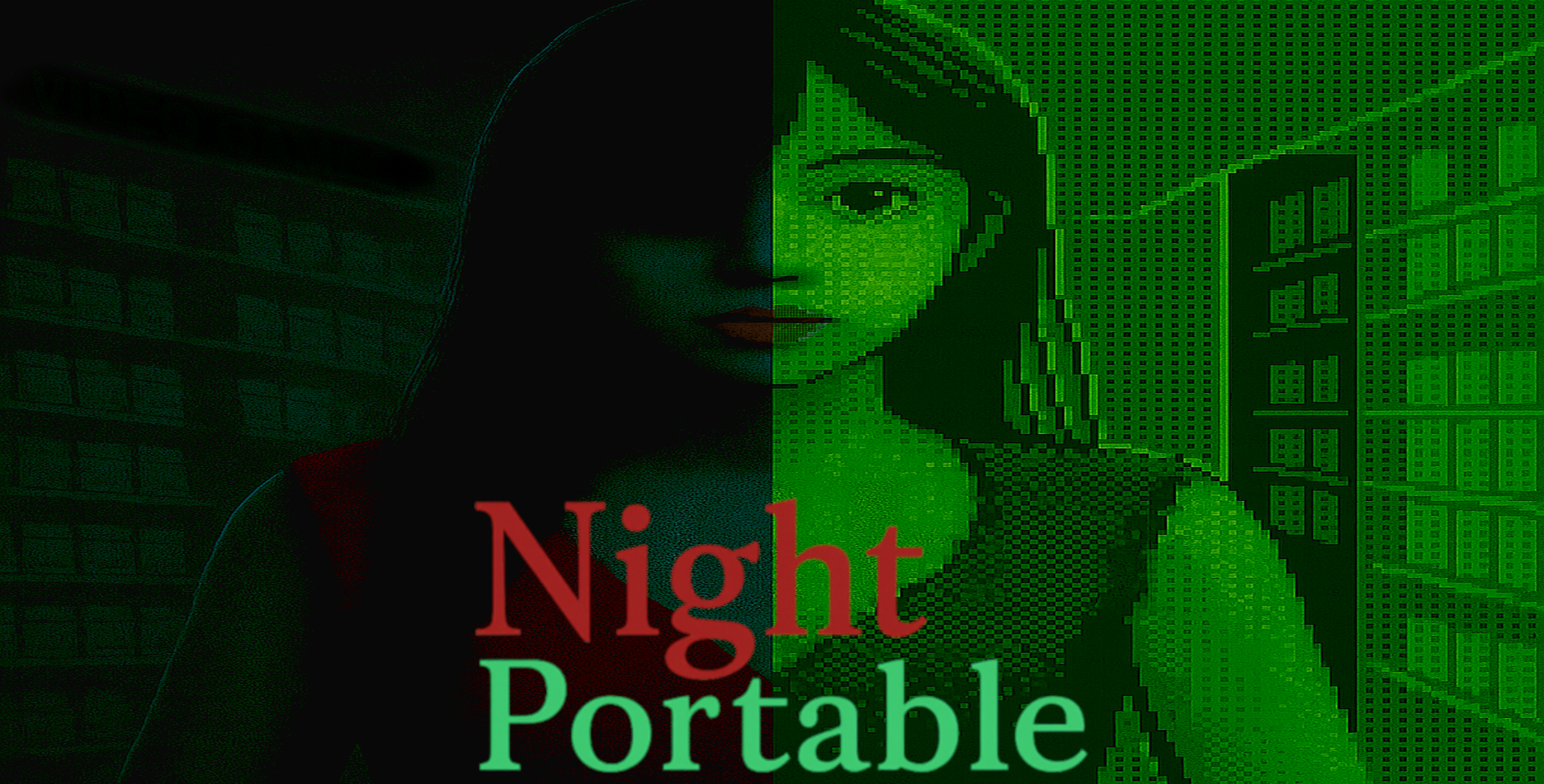
Night Portable made me worry about what was happening outside a handheld game almost as much as what was happening on its screen.
QUICK SNAPSHOT
Developer: Pumpkin Miso Studio
Genre: Night-shift survival horror
Platform: PC (Steam)
Demo Length: Approximately 15 to 20 minutes, depending on retries and play style
Demo Available: September 5, 2026, after the Indie Life Streamers TRIP THREE broadcast
Full Release: Planned for 2026
Languages: Japanese and English interface and subtitles
Night Portable combines a 3D night shift with three retro handheld games and a side scrolling story. Items earned through the handheld can carry over into the 3D portion, while whatever is roaming the store doesn’t politely pause while you’re distracted.
KEY TAKEAWAYS
- The handheld games are more than a visual gimmick.
- Learning the store and its rules noticeably changed how I played.
- The entity became more manageable once I understood its behavior.
- Its mixture of PS1 inspired 3D and retro 2D gives the demo more going on than I initially expected.
- Some objectives took me a while to understand during my first few attempts.
FIRST IMPRESSIONS
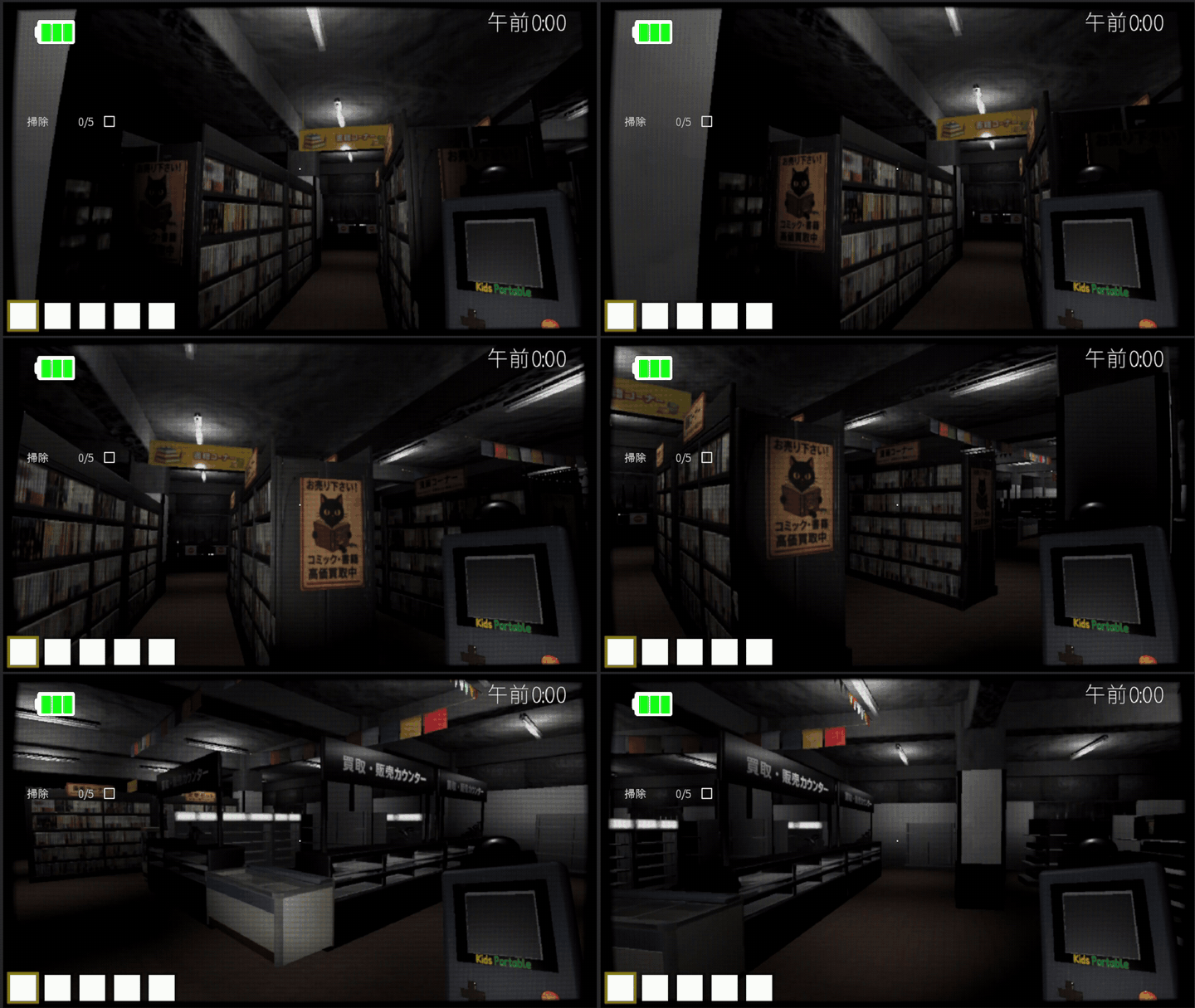
Going into Night Portable, I had a pretty different idea of what I was about to play.
The midnight-to-6 AM setup made me expect something closer to Five Nights at Freddy’s with the complete tasks, deal with an increasingly aggressive threat, and somehow make it to morning objective.
My first few minutes didn’t fully discourage that assumption.
I later learned this was way more different and interesting than my initial thought gave. Unlike a FNAF like game, its leans towards a night-shift survival horror where playing games can impact your survival.
The tutorial is presented through a computer inside the game, which I liked. Rather than pulling me outside the setting, I sat down and learned the controls through something that belonged in a work environment.
I played with a controller, so having time to figure out how everything was mapped before starting the shift helped.
Then I read the employee email. It in essence explained to not approach the entity, don’t run unnecessarily, watch your light, and use the handheld’s limited flash if it gets too close.
Okay, it’s a simple enough criterion o breeze throguh, right? Nope, it wasn’t.
THE GAMEPLAY LOOP
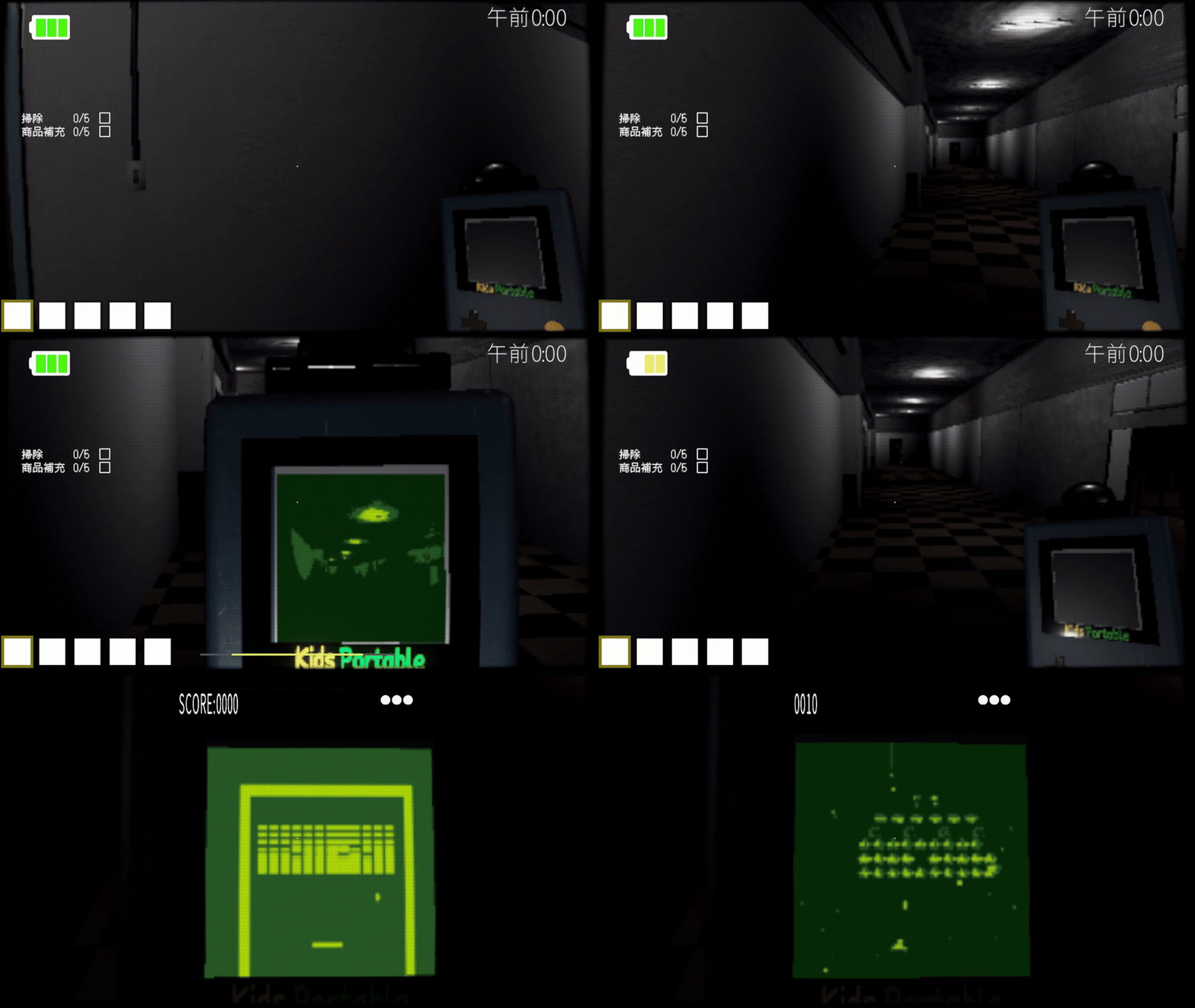
My first night was basically me learning how badly I had misunderstood the job.
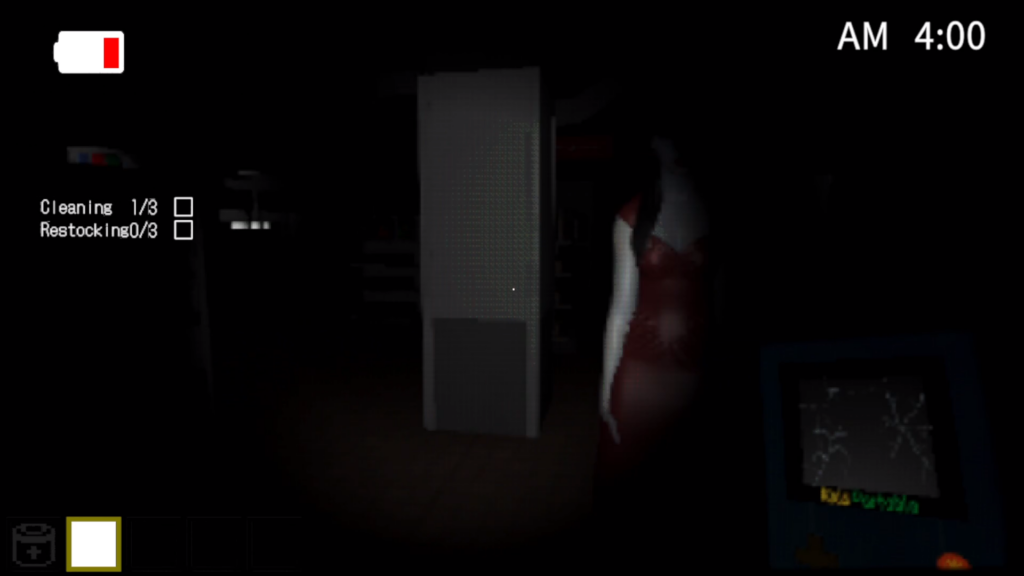
I grabbed a mop and entered the dark sales floor looking for spots that needed cleaning. Moving around with my flashlight initially made me apprehensive, but after finding a couple of spots, I started settling in.
Then VHS style static appeared across my vision. Suddenly I wasn’t quite so comfortable.
At one point I dropped my mop to use the handheld and started playing the block breaking game.
The handheld games give rewards that can become usable items during the 3D shift, including batteries and radios.
More importantly, the threat is still active while you’re playing. So, while playing, don’t expect it to vanish because you have finished playing. I learned that part quickly.
After losing the handheld game, I found the entity coming toward me. Eventually I was wandering around at 3 AM trying to figure out where I’d dropped my mop while also watching for static.
Long story short, I didn’t survive the shift.
THE ATMOSPHERE
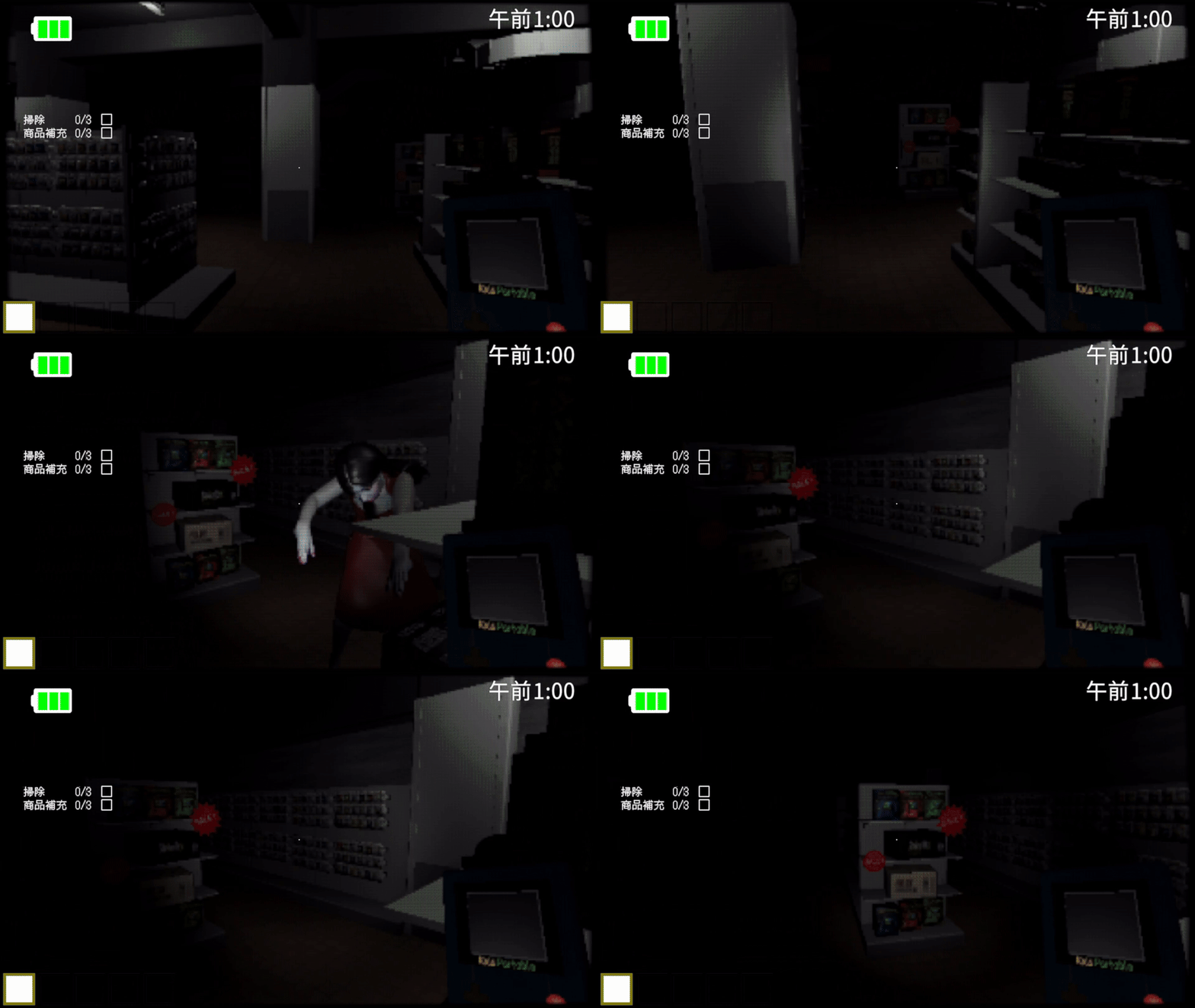
The darkness weighs heavy on you while playing. Even with lights on in the store, the sound – I’ll get to that later – and lighting creates a compressing vibe.
Searching aisles with a flashlight made an otherwise mundane task, like finding something to mop feel uncomfortable because I couldn’t be sure when the entity would appear.
The visual warnings also worked. Once I associated the VHS interference with danger, seeing it immediately changed what I was doing.
There’s also something appropriately weird about staring down at a retro handheld while knowing the store around you is unsafe.
The game jumps between retro 2D, PS1 inspired 3D, and a deliberately uncanny supernatural presence. The preview gave me enough of that contrast to make me curious about how far the full game takes it.
SOUND DESIGN
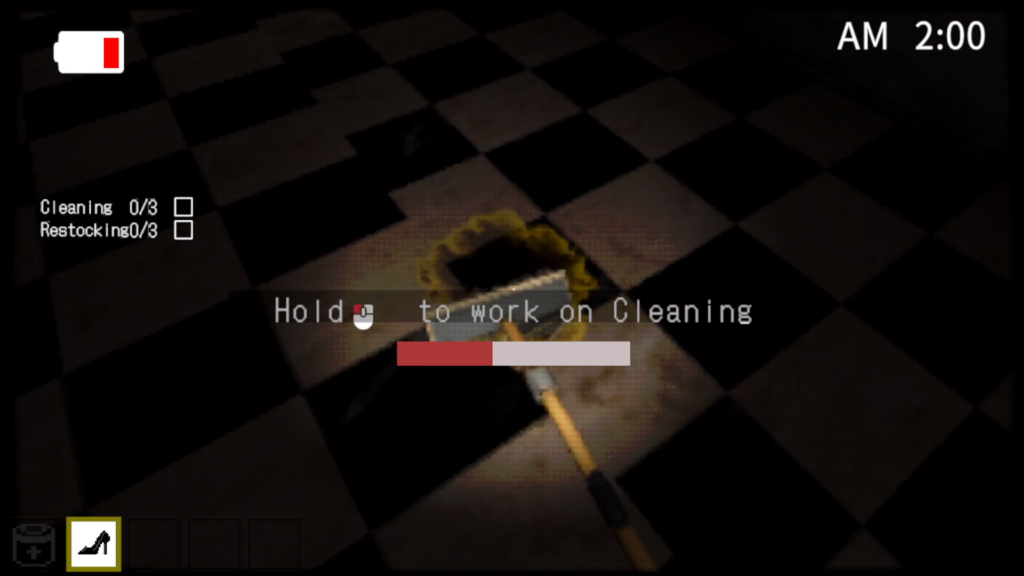
I don’t have a strong verdict on the overall sound design yet. However, from what I experienced, it adds to the isolating feeling.
What I noticed is that sound matters mechanically. The employee instructions warn that the entity reacts to loud footsteps, giving movement another consideration beyond simply sprinting away whenever something goes wrong.
I also heard occasional laughs and other subtler sounds with static that reignited the apprehension I had from earlier. The click of the flash can act as both a comfort as you know it can buy time and make you anxious hoping it works.
WHEN IT CLICKS
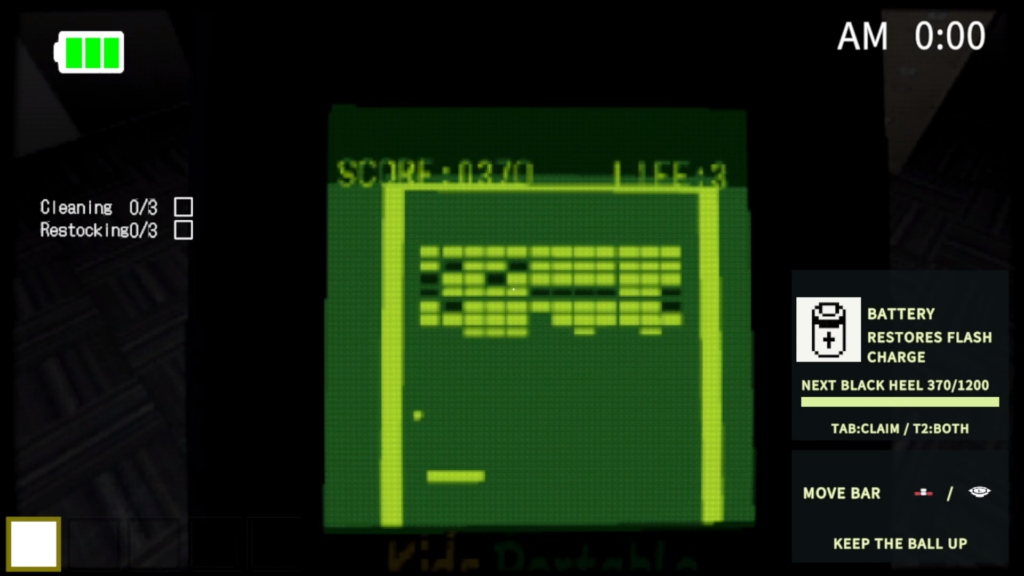
In full disclosure, it took me four attempts to survive.
My second attempt went better because I understood the controls and successfully stunned the entity. Suddenly, I realized that I had made another mistake. I hadn’t noticed my handheld battery was depleted.
My third attempt taught me more about stocking. Once I realized the appropriate shelves highlight yellow, that part made considerably more sense.
By attempt four, my behavior had completely changed.
I cleaned first, stocked afterward and stopped treating every encounter with the entity like an emergency.
Using the corridors, it gave me room to maneuver, and rather than constantly relying on the handheld flash, I started outrunning the entity and using the store layout to my advantage.
Eventually, everything was stocked, everything was cleaned, and I just needed to survive until 6 AM.
I even kept traversing round the office because I wasn’t sure whether the game would make me literally clock out.
Considering I’d had to clock in at midnight, I wasn’t taking chances.
WHAT DIDN’T WORK
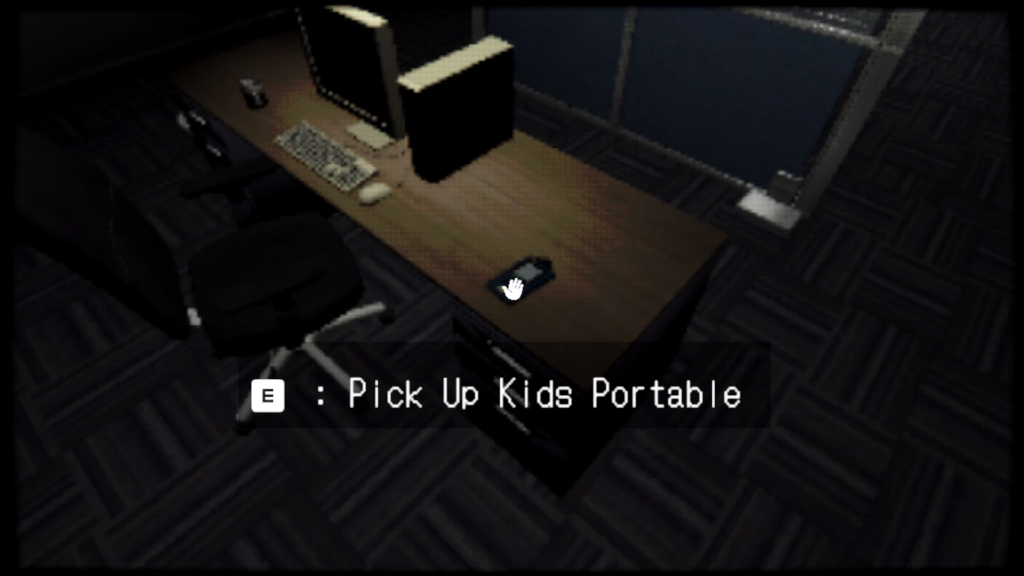
The first night could be clearer about some objectives.
Finding the randomized cleaning spots took me a while, as some were not just on the main sales floor. There’s also an interesting tension with the entity itself.
Early encounters made me genuinely nervous. By my successful attempt, I’d learned enough about movement and the layout that I was considerably more willing to simply outrun it.
That learning curve felt rewarding, although I’d like to see whether later shifts find ways to prevent that familiarity from making the threat too predictable.
I will say that the entity does appear outside the main sales floor sometimes, so this does help it from being predictable as I was caught when trying to immediately leave the sales floor.
DEMO VERDICT
Night Portable initially looked like a straightforward survive-the-night setup. Yet, it gradually became more interesting as I understood how the handheld, resource management, store layout and entity interacted.
The biggest hook for me is still the handheld. There’s a good risk/reward idea in voluntarily staring at a tiny game screen to earn something useful while knowing the actual threat hasn’t stopped moving just because you’re busy breaking blocks.
And reaching 6 AM revealed that there’s more happening here than completing another night shift.
I won’t spoil where the preview goes from there, but the change left me more interested in the story behind the store and its supernatural presence.
After four attempts, Night Portable went from me fumbling around a dark sales floor looking for my missing mop (learned mop does appear back in store room if really lost) to deliberately running routes around something trying to kill me.
For a short horror demo, that’s a satisfying learning curve.
Interested in Night Portable? You can check it out and wishlist it on Steam before the public demo on September 5.
Preview Disclosure: This article is based on an advance Steam Playtest build of Night Portable provided by Pumpkin Miso Studio for independent editorial consideration. Coverage was not required, and no payment, sponsorship, or advertising was involved. The preview build is pre-release, and content or balance may change before the public demo.
Media Credit: © Pumpkin Miso Studio / Night Portable

Nero is a writer and lore researcher known for reviewing games on Steam. With years of experience playing horror games, uncovering hidden narrative patterns across indie and AAA titles, and publishing museum catalogs on ancient objects, he blends commentary with psychological horror theory. When he’s not unraveling storylines, he’s enjoying rock music, drawing, working in analytics or obviously playing video games. Check out his latest post to explore the furtive patterns hidden in game lore.