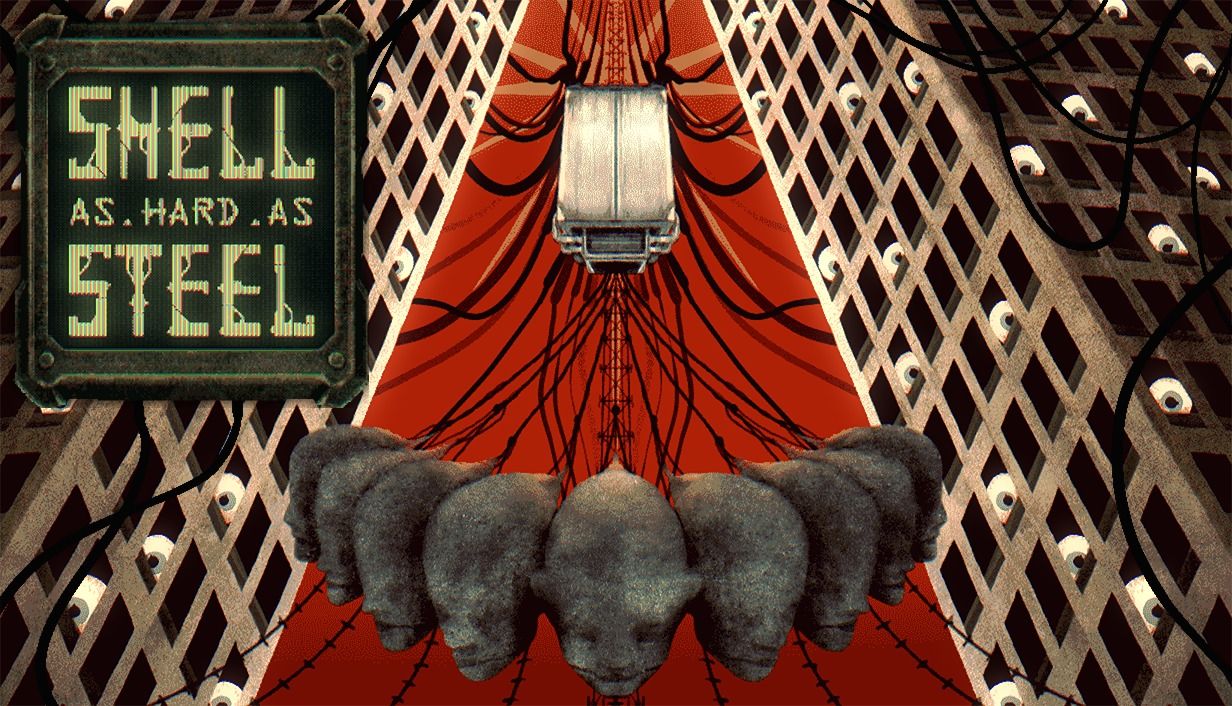
I was hired to fix an elevator. Nobody mentioned the abandoned offices, missing employees, or the body hanging upstairs.
QUICK SNAPSHOT
- Developer/Publisher: ACID DROP (Solo developer, Spain)
- Genre: First-Person Psychological Horror, Mystery, Puzzle
- Platform: PC (Windows – Steam)
- Demo Length: Approximately 30 minutes
- Demo Available: Free on Steam
- Full Release: Late 2026 (Q4, planned)
- Languages: 29 (interface and subtitles)
- Wishlist: Shell as Hard as Steel on Steam
KEY TAKEAWAYS
- A corporate horror mystery that unfolds through environmental storytelling rather than constant jumpscares.
- Manual elevator controls make traveling between floors surprisingly tense.
- CRT camera exploration turns abandoned offices into an unsettling investigation.
- A cliffhanger ending that left me wanting answers
FIRST IMPRESSIONS
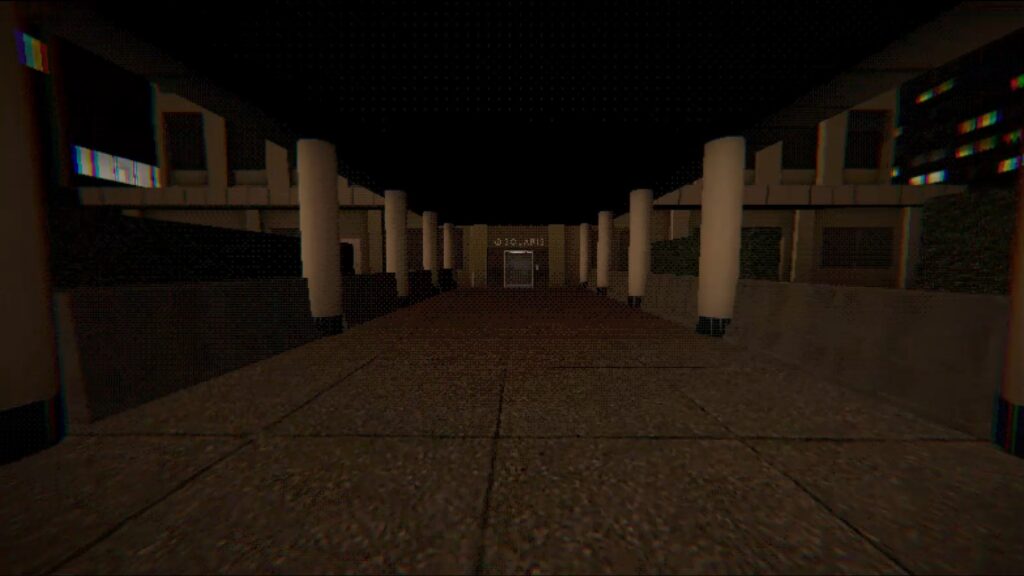
Never imagined an elevator repair would lead to a nail-bitting mystery. The Shell as Hard as Steel demo, a first-person psychological horror game is from ACID DROP, a solo indie developer based in Spain.
Initially, I expected a straightforward elevator maintenance job, but boy was I wrong. I found myself investigating what appeared to be a corporate nightmare.
The demo opens with a vintage style commercial introducing Solaris, a corporation seemingly involved in everything from housing and transportation to food and healthcare.
Solaris recently acquired Meridian, another company with a long history. Apparently, that acquisition included an old skyscraper with a malfunctioning elevator.
That’s where I come in. A phone call informs me that Solaris needs the elevator operational during renovations. Interestingly, the on-screen dialogue becomes more demanding than the spoken instructions.
After grabbing my equipment and entering the building, my supposedly routine maintenance shift begins.
THE GAMEPLAY LOOP
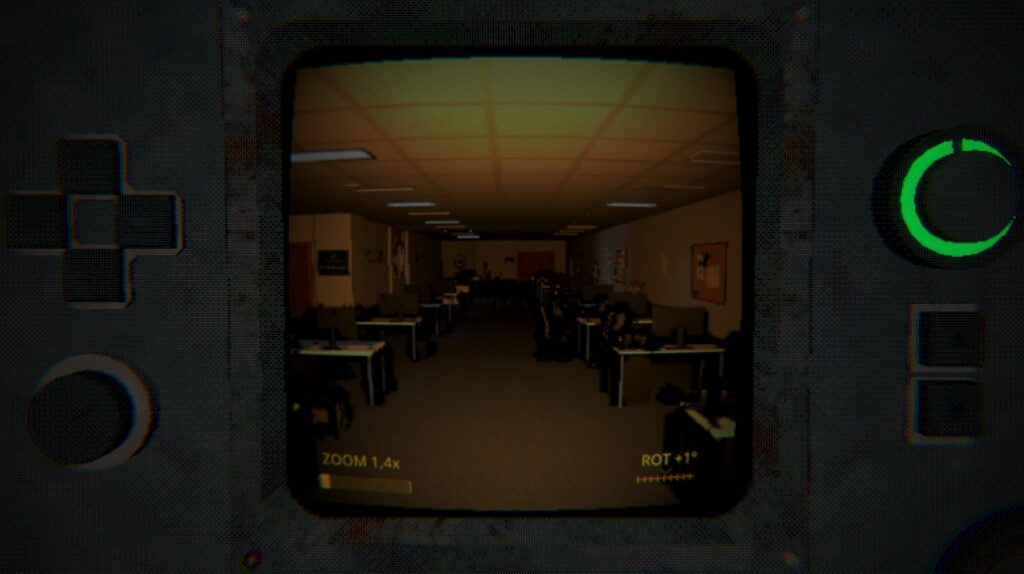
The Shell as Hard as Steel gameplay revolves around manually operating an elevator, investigating abandoned floors, and solving clues to determine the next destination.
Not like ordinary elevators, this one requires calibration. Using a numeric keypad, I entered my target height, adjusted cable tension, and operated the braking system. Reaching each destination meant carefully positioning an indicator within acceptable boundaries.
While attempting to reach floor 39, I stopped short of the target. Suddenly, the elevator began falling, forcing me to enter an emergency braking sequence before crashing. Thankfully, I survived.
According to ACID DROP, mistakes can damage cable integrity, while floor heights change between runs. That means memorizing every stop isn’t necessarily going to save you.
Exploration works differently, too. I controlled a remote camera through a CRT monitor inside the elevator. I could move through corridors, rotate the view, activate a light, and photograph suspicious objects.
I particularly liked reviewing my photographs afterward, including the option to download them outside the game.
It’s a neat feature that makes gathering evidence feel more involved.
THE ATMOSPHERE
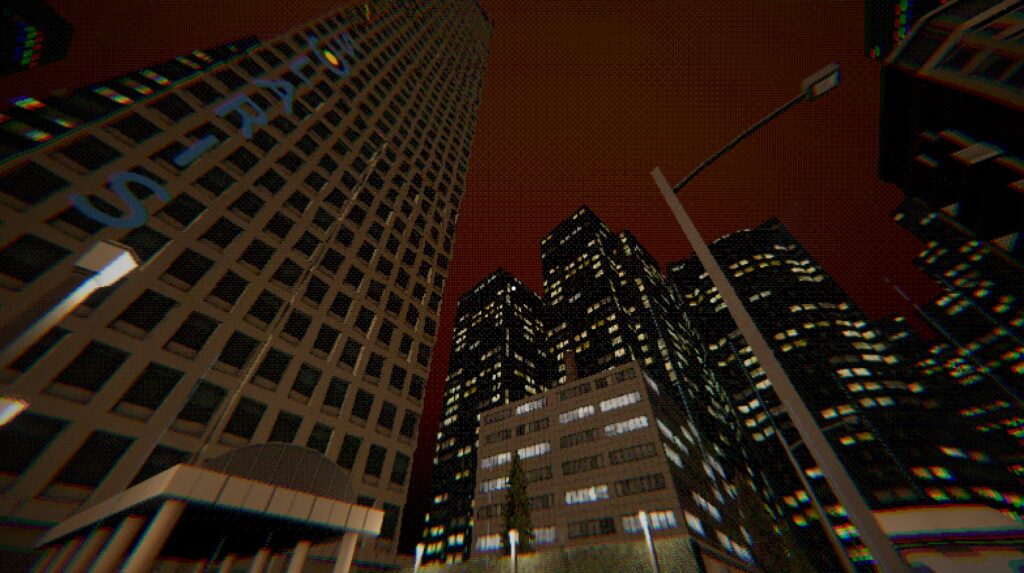
The retro graphics give this indie horror game a distinctly old-school appearance.
Abandoned offices and endless corporate signage establish an unsettling environment without constantly threatening the player.
On floor 13, I discovered documents referencing Solaris’s arrival, alongside a poster encouraging workers to organize. By floor 39, things became more suspicious.
Messages accused HR of betrayal, while a projector instructed employees to remain calm and stay at their workstations.
Apparently, everything was under control. Sure.
Further upstairs, I encountered restricted areas, increasingly hostile graffiti, and more disturbing evidence.
Floor 75 was particularly memorable. There were emergency supplies, anti-Solaris messages, bloodstains, and eventually a hanging body.
Whatever happened here clearly wasn’t a routine workplace disagreement.
SOUND DESIGN
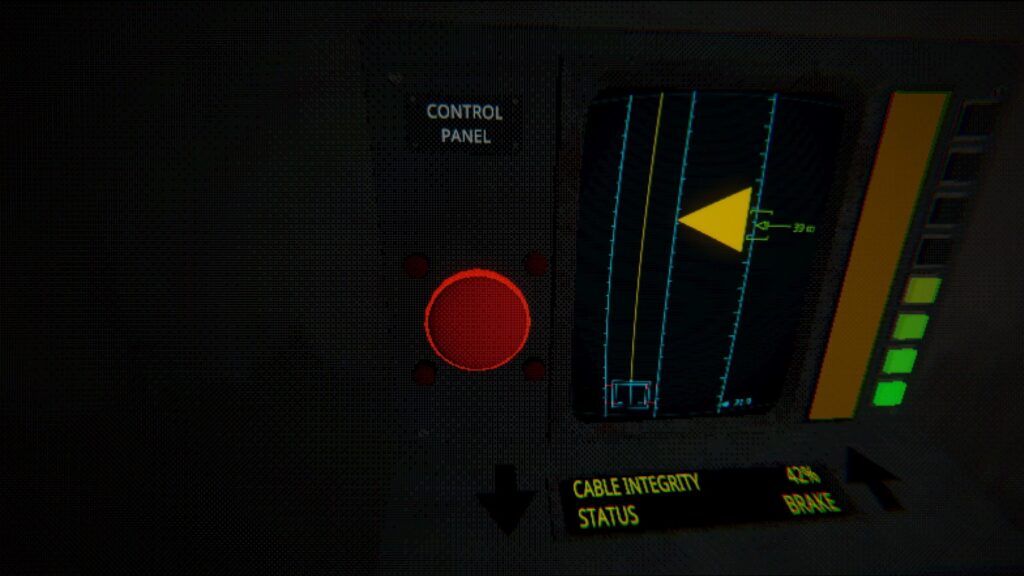
The opening commercial’s businesslike narration establishes the game’s corporate identity before the investigation begins.
Its reassuring presentation contrasts with the disturbing evidence found upstairs.
The phone call also contributes to that uneasiness, especially when the displayed instructions appear to diverge from what I’m hearing.
The psychological horror game relies heavily on atmosphere and environmental storytelling rather than overwhelming players with constant scares.
During my playthrough, the mystery itself carried much of the tension.
WHEN IT CLICKS
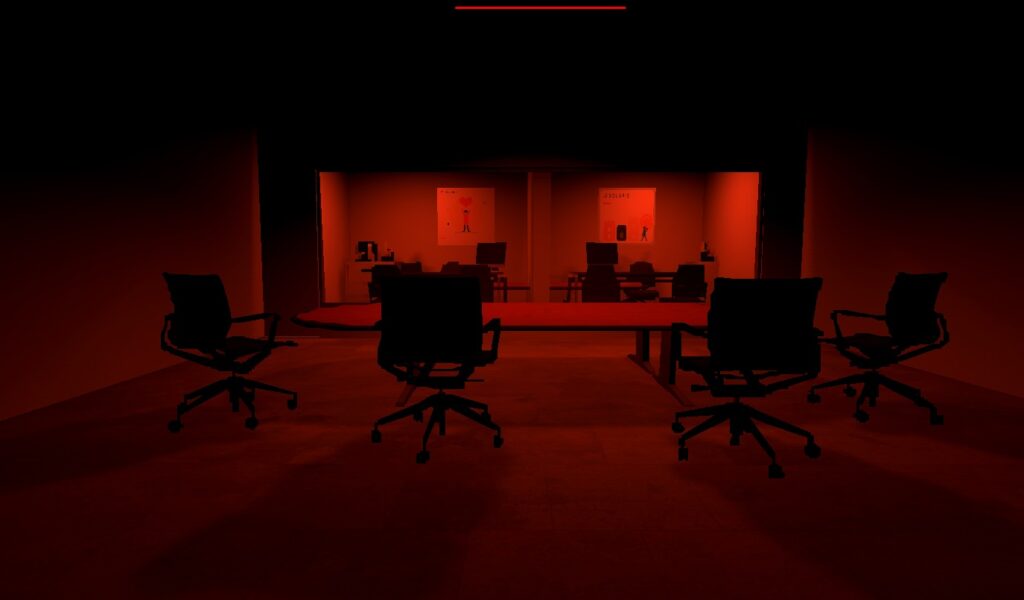
What caught my attention was discovering that employees appeared to have been trapped inside the building.
Their notes suggested malfunctioning elevators, secret meetings, and growing hostility toward Solaris.
Suddenly, I was piecing together what happened to these people. One creepy moment occurred when I photographed an area marked by blood.
A shadowy figure appeared in the picture. What I appreciated was that this didn’t turn into a monster chase. It was a brief, unsettling discovery that added another question to an already intriguing mystery.
Interestingly, the game’s title draws inspiration from sociologist Max Weber’s concept of the iron cage, describing systems built around efficiency, calculation, and control.
Considering Solaris’s corporate messaging and the employees’ apparent circumstances, that connection makes sense.
WHAT DIDN’T WORK
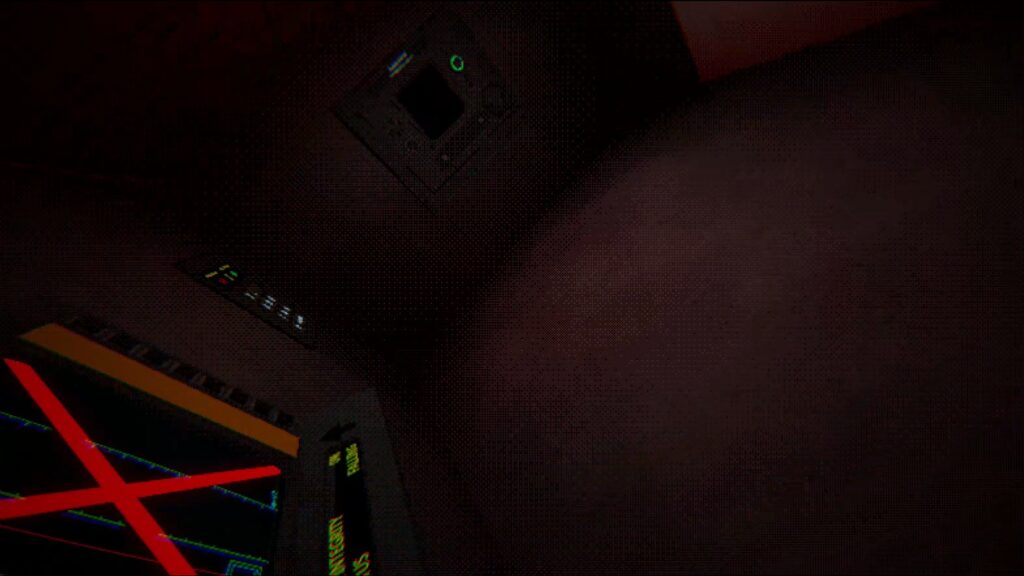
My biggest minor complaint came during the introduction.
As I approached the skyscraper entrance, the title and developer credits appeared rather abruptly. I found that a little jarring after the otherwise engaging opening.
The elevator controls also took some adjustment, particularly when learning how the targeting and braking systems worked together.
However, the instructions were reasonably clear, and once I understood the mechanics, I had little trouble navigating the controls.
The challenge came from executing the movements accurately, which got simpler to do fairly quickly.
DEMO VERDICT
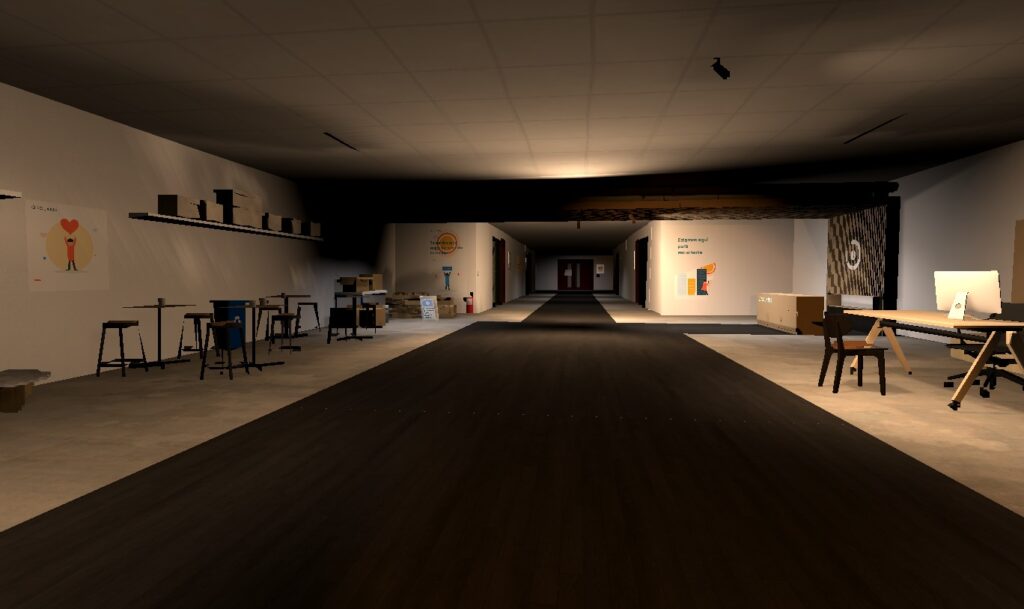
For this Shell as Hard as Steel review, what stood out most was the mystery.
The combination of mechanical elevator operation, CRT camera investigation, and corporate horror gives the experience an identity beyond another abandoned building game.
What interested me was the unfolding mystery surrounding Solaris, Meridian, and the employees who apparently never escaped.
The demo ends after the elevator reaches floor 91. The camera stops working, the doors open, and I’m forced to step into near-total darkness.
Well, that’s one way to end a maintenance shift.
If you enjoy psychological horror driven by investigation, environmental storytelling, and unsettling corporate themes, this demo is worth checking out.
WATCH THE FULL PLAYTHROUGH
Want to see how my elevator repair job turned into a corporate horror investigation?
Watch my Shell as Hard as Steel demo gameplay below and see what I uncovered inside the tower.
Play the free demo or wishlist the full game:
Shell as Hard as Steel – Steam
Curious about who survives an unknown encounter like this game? Check out Deep Frost or jump into another psychological horror with Good Children Say Grace.
If you enjoy indie horror breakdowns like this, follow Gravenox Horror Gaming, and trust me to explore horror so you don’t have to.

Nero is a writer and lore researcher known for reviewing games on Steam. With years of experience playing horror games, uncovering hidden narrative patterns across indie and AAA titles, and publishing museum catalogs on ancient objects, he blends commentary with psychological horror theory. When he’s not unraveling storylines, he’s enjoying rock music, drawing, working in analytics or obviously playing video games. Check out his latest post to explore the furtive patterns hidden in game lore.