Teeth Cutter builds survival game horror by making grief, public speaking, and scientific curiosity feel like three different ways to volunteer for punishment.
QUICK SNAPSHOT
Developer: Phillip Hubbard
Genre: Indie horror / psychological horror / anthology horror
Platform: PC
Price: $6.99 on Steam; $4.99 or more on itch.io at the time I checked.
Playtime: Each scenario runs from a few minutes to about half an hour, which fits the game’s short story structure.
Worth Playing?: Yes, especially if you like horror games that treat normal fears like they’re already halfway possessed.
KEY TAKEAWAYS
- Tension builds through scale, observation, and choice under time constraint.
- Hangerval, Indiana makes grief feel huge enough to physically climb.
- Public Speaking turns anxiety into a room full of eyes waiting for one mistake.
- Portal works because it makes curiosity feel like a bad survival instinct.
- These last 3 games are strong, but one segment risks becoming more frustrating than scary when the wrong item choice blocks progress.
FIRST IMPRESSIONS
At this point in Teeth Cutter, I’m walking into these shorts expecting unique horror. That’s probably the first sign the game is working.
Phillip Hubbard’s Teeth Cutter is officially described as a collection of short horror stories, with multiple distinct scenarios that each try to deliver their own kind of fear.
That sounds simple enough, but the pattern starts to feel nastier. The game keeps taking recognizable fears and asking, “What if this was not metaphorical anymore?”
In this last sequence grief becomes a ritual, public speaking becomes a predator, and scientific exploration becomes a trap with a clean lab coat on.
This is also where the anthology format starts doing something interesting. Each short feels separate, but emotionally, they keep talking to each other.
Hangerval, Indiana asks how far you would go to bring someone back. Public Speaking asks how long you can stay coherent while being watched. Portal asks whether humanity deserves to enter a world just because they found the door.
That’s a weird trio, and it works better than it should.
THE GAMEPLAY LOOP
There are three different loops, and all have the same ugly spine:
Need something, enter hostile space, interpret pressure, make a choice, pay for it.
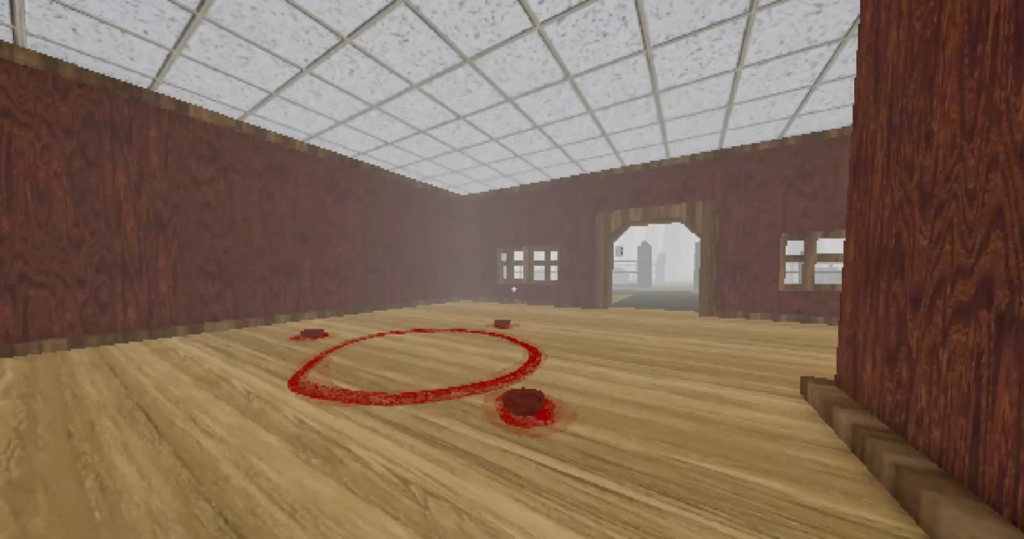
In Hangerval, Indiana, the need is emotional. Your true love has died, and you find a resurrection spell that requires teeth of power.
Sounds odd, I know. Yet, the whole thing starts already feeling wrong because love has been converted into a task list of go here, get this, spill blood, fill bowls, and continue.
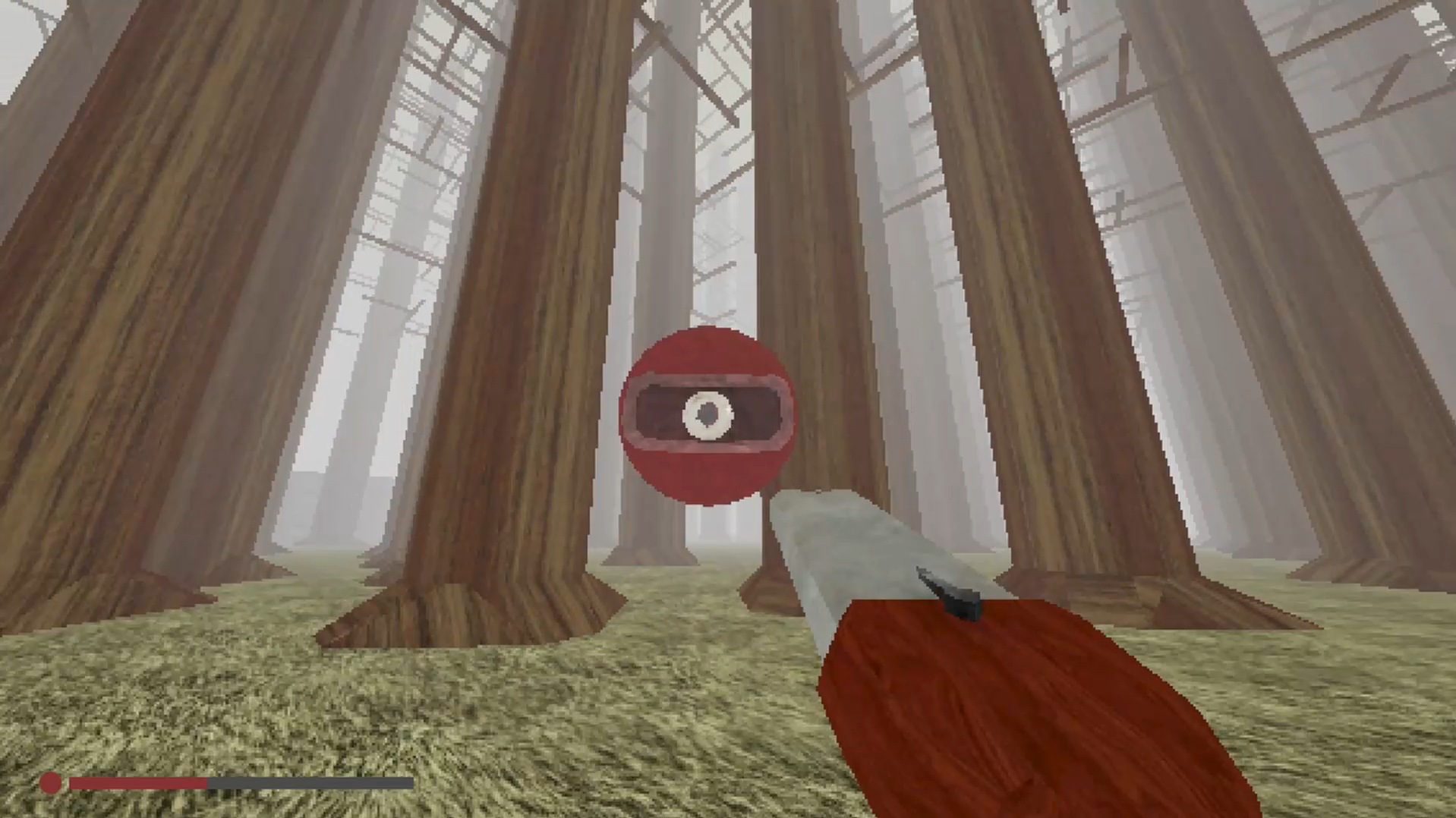
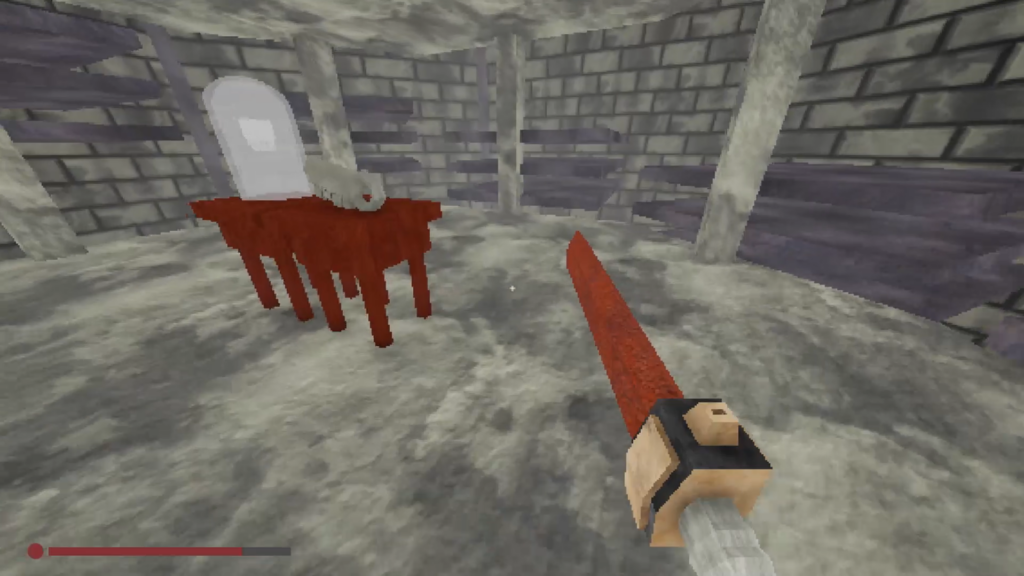
You leave the house, go into the graveyard, choose between a shotgun and a sword, then enter the forest. That choice matters more than it first seems.
I picked the shotgun, fought floating eye creatures, read the corporate warning about the mist, then later swapped to the sword. Big mistake, as the boss later needed the gun, so the run basically punished me for experimenting.
That is where tension builds and breaks at the same time.
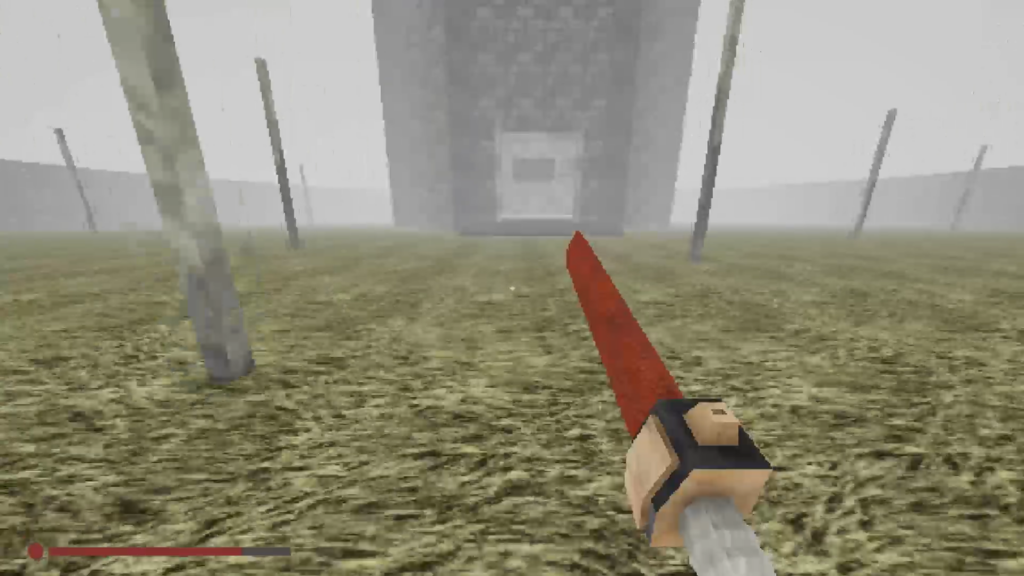
It builds because every object feels important. Then it breaks because the climb back up that massive tower is not something you casually want to redo.
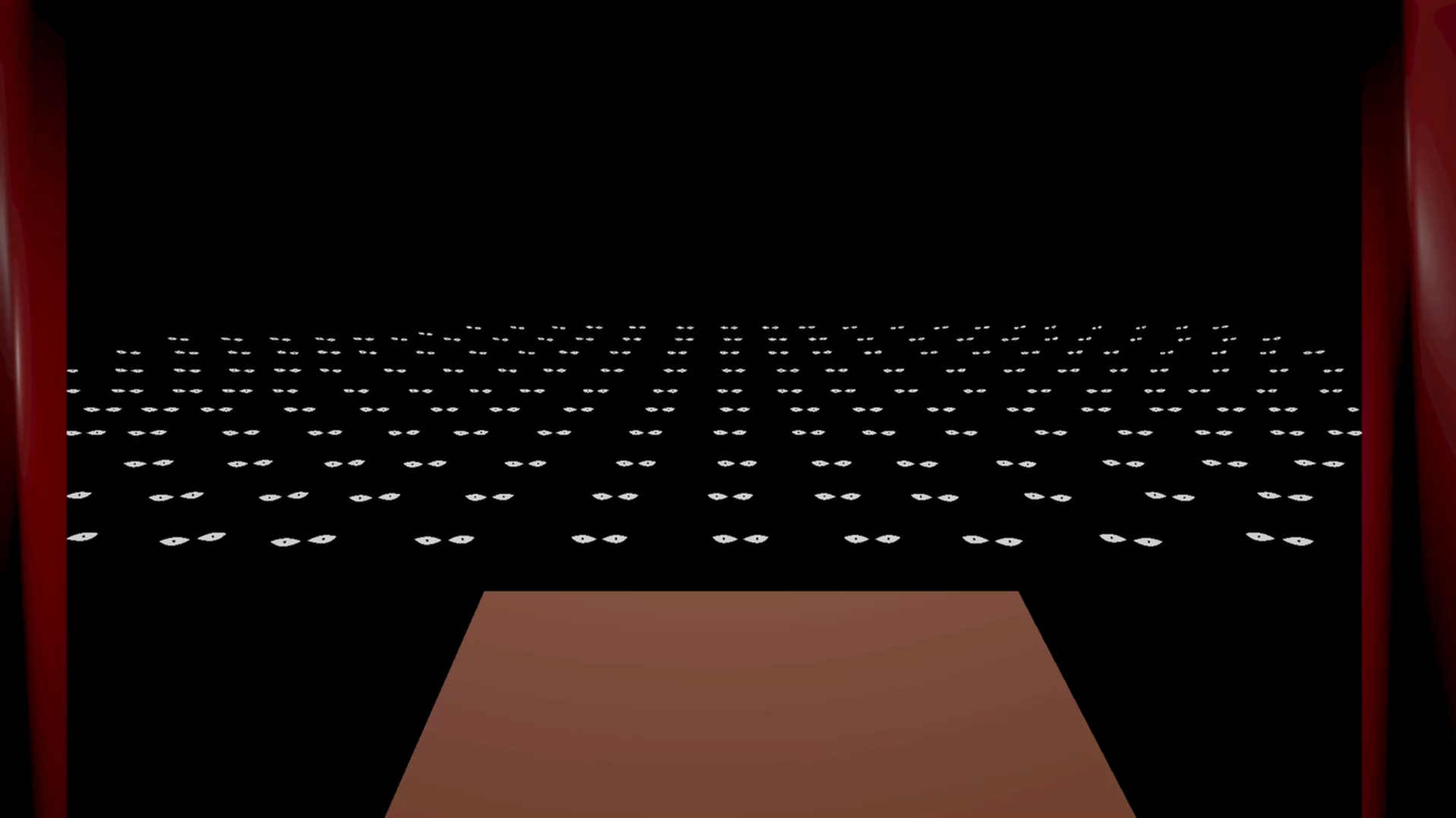
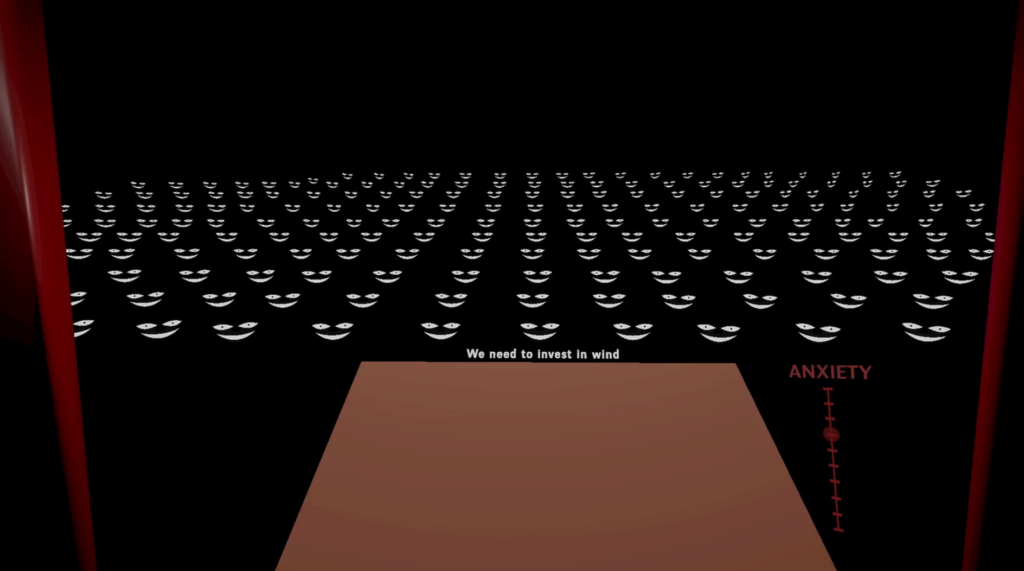
In Public Speaking, the loop is sharper. You stand at a podium, eyes appear, then the anxiety meter rises.
You get a few seconds to choose the correct sentence from options where only one actually makes sense. The wrong answers are not just “bad.” They are scrambled versions of communication itself.
The horror is that you know what you mean, but the words are trying to betray you, which is a painfully specific thing to experience, especially if you’re hyper self-critical like me.
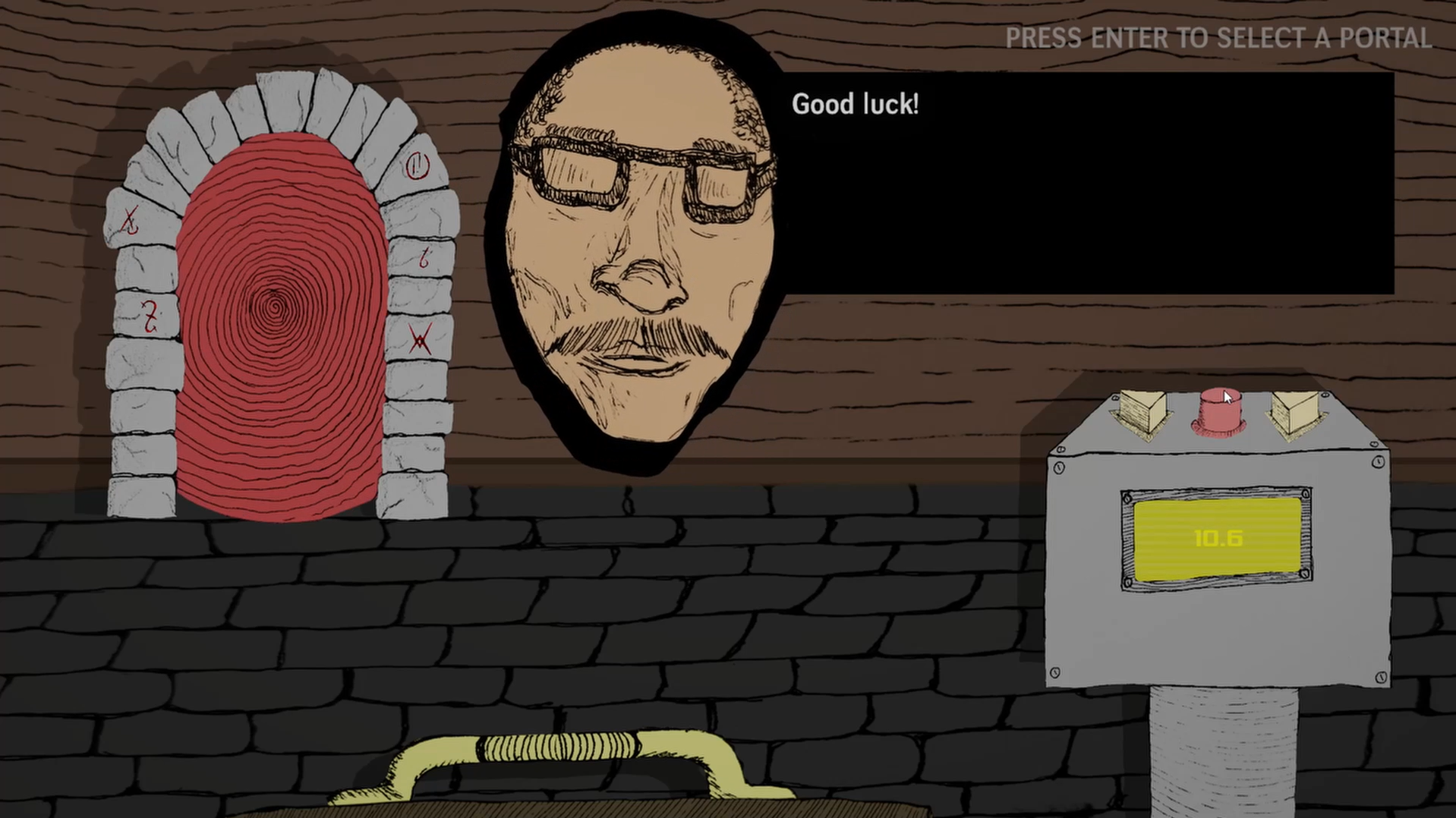
In Portal, the loop slows down. Here you scan frequency, find anomaly, use tools, observe. Decide, then enter the portal.
The game gives you science equipment but not comfort. Telescope, thermostat, oxygen reader, pressure sensor. It’s all very official and very measured. Yet still, the moment you look into the portal and see sandstone, your brain immediately goes, “Nope, this is where the mistake starts.”
THE ATMOSPHERE
This is where the survival game horror hits hardest.
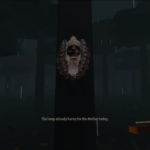
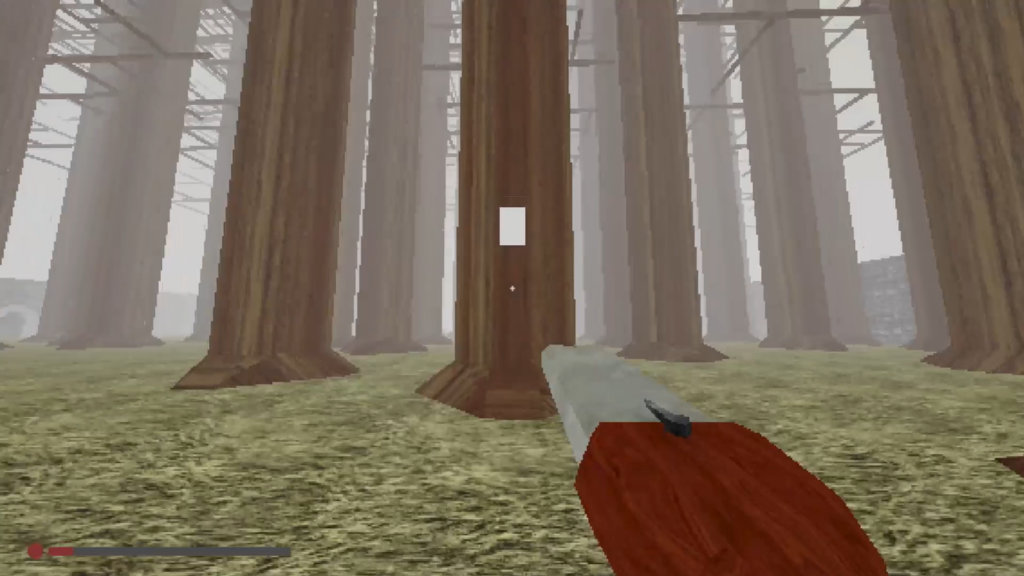
Hangerval, Indiana has scale horror baked into it. With all the massive trees, the tower, the slow climb, and the floating eye monsters, it all works because the world feels too large for the grief you brought into it.
The resurrection setup starts intimate. Soon, however, you’re pushed into spaces that make that grief feel ridiculous and tiny.
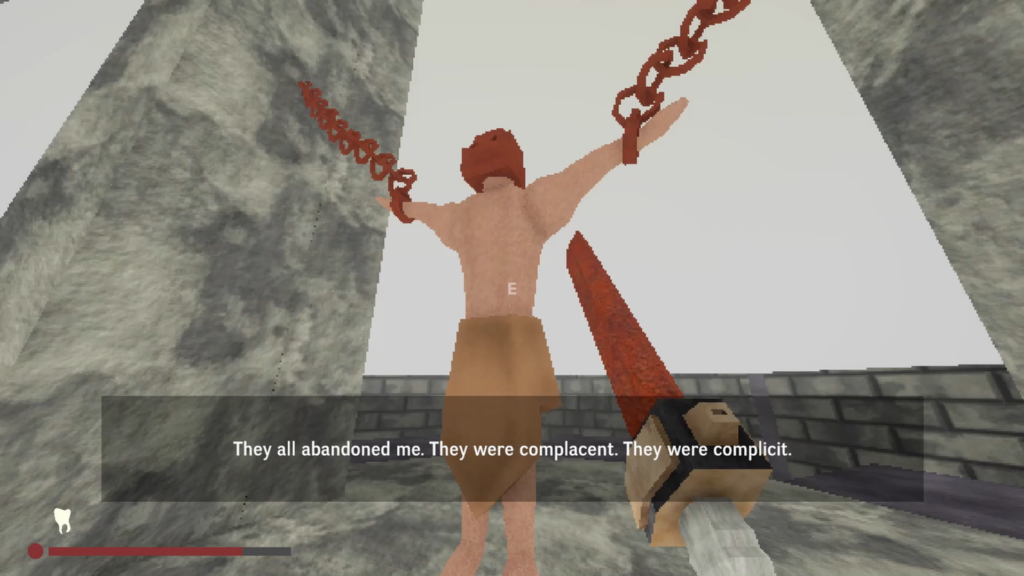
The tower is the best example. Climbing it step by step becomes part of the dread. It is a punishment with architecture.
Then you reach the bound prisoner at the top.
He talks like someone crushed by markets, betrayal, and cowardice. He should have sold when he had the chance while others held out. They abandoned him. They were complicit.
Suddenly the horror shifts from megalophobia to a private equity cosmic punishment, and somehow that fits Teeth Cutter perfectly.
The game loves making corporate language sound like scripture from a rotten god, which you can experience in Factory.
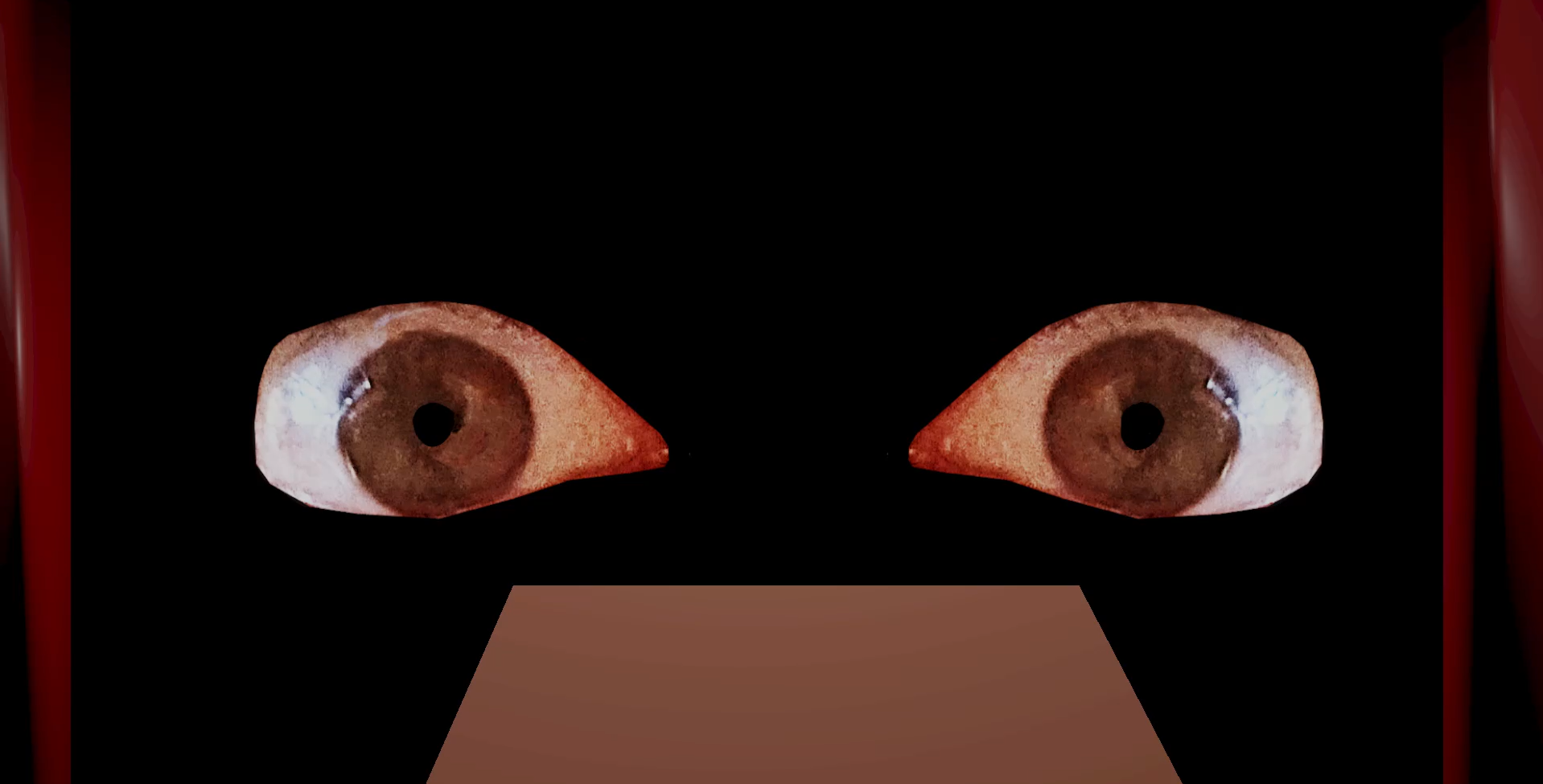
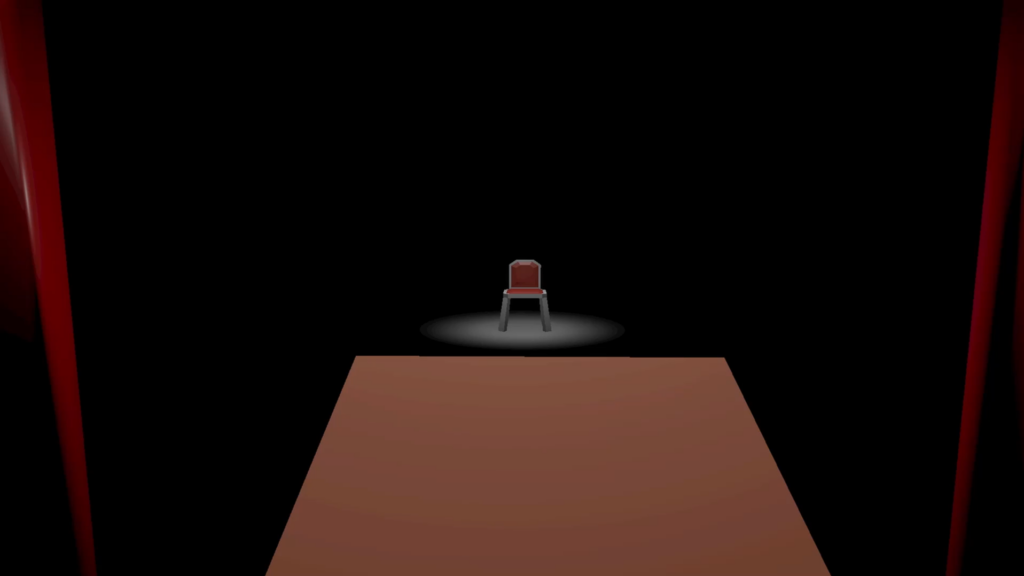
Public Speaking is visually simpler, but maybe more immediate. You got a stage, a podium, and eyes, then more eyes. With the wrong ending, two massive bloodshot ones stare, swallowing the room.
This is one of the cleanest horror metaphors in the game so far. It does not need a monster design with teeth and claws. The room is the monster, and the audience is not listening. It is consuming.
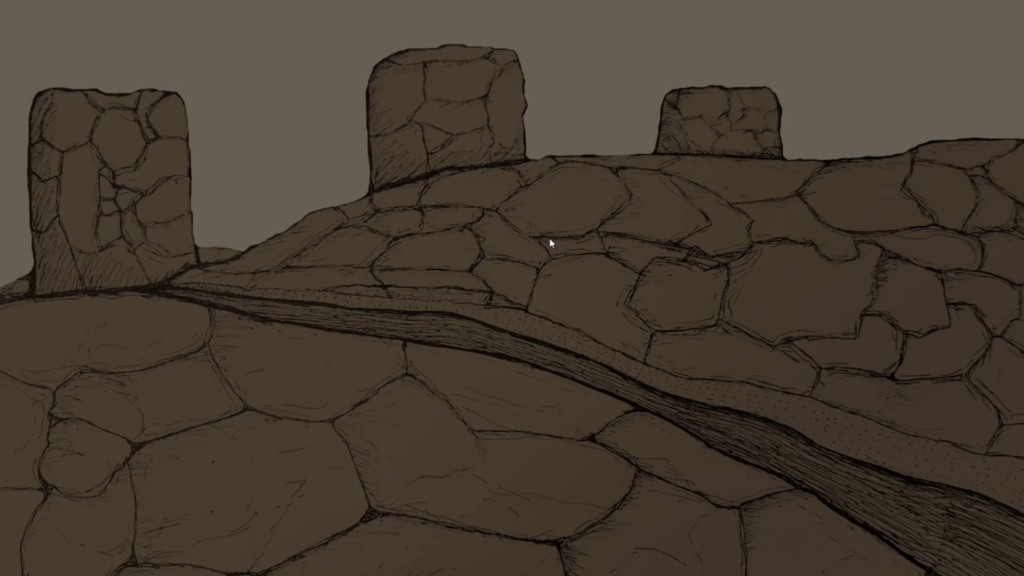
Portal is the quietest of the three. That sandstone dimension feels wrong because it is almost empty. The vast desert and stone plateaus tower over you, as hot air and a rust smell surround you.
A path carved into the earth like something was dragged through it is the only hint of some kind of life. That last detail is what makes the scene work.
A normal empty desert is lonely, but a desert with a dragged path is evidence.
SOUND DESIGN
Sound in this part is less about big scares and more about mental pressure.
Hangerval relies on environmental emptiness and enemy interruption. The forest is wide enough that every sound feels like it might be coming from somewhere you failed to check.
The eye creatures firing projectiles make the space feel hostile, but the tower climb is where silence starts doing a lot. The longer you climb, the more aware you become of how much game time is being spent on one vertical idea.
Public Speaking uses time as sound, even when you are mostly reading. The anxiety meter might as well be a ticking clock. You feel the countdown in your hands.
As you scan the options and try to parse syntax, you are suddenly “choosing the right greeting,” and this feels like defusing a bomb in front of a crowd.
Portal uses the opposite approach. The lab setup makes you expect technical feedback, but the real sound is hesitation. The silence after looking through the telescope lets the portal sit there as a question you already know you should not answer.
WHEN IT CLICKS
These games click when you realize each short is about a different kind of exposure.
Hangerval exposes grief. You want someone back so badly that you accept a ritual built on blood and teeth. You enter a world that physically dwarfs you.
Public Speaking exposes the self. You are standing in light, being processed by a crowd. The fear is not death but failing to translate yourself in time.
Portal exposes curiosity. You have tools, instructions, and a mission that sounds almost noble. However, the second you look through the telescope, the question changes from “Can we enter?” to “Why do we think we are allowed?”
That is when Teeth Cutter works best. It takes a premise that could be goofy and makes it feel like a diagnosis.
WHERE IT BREAKS
The strongest break for me was in Hangerval.
The weapon choice issue is interesting in concept, but painful in practice. I like when horror games make item choice matter. I do not love when the consequence is “you should restart and redo the long tower climb.” That shifts the feeling from dread to mild exhaustion.
The tower climb works once because it is oppressive.
Having to redo it because I lost the gun? That turns oppression into work.
Public Speaking has less of that issue because the loop is short and replaying for the bad ending makes sense. The failure state is actually worth seeing.
Watching the room collapse into that massive eye feels like the game rewarding curiosity with discomfort, which is exactly the Teeth Cutter lane.
Portal also avoids breaking because it ends before the mystery overstays. It gives you just enough to feel like the decision to enter was probably bad, then leaves you with the desert and the dragged path.
WHAT DIDN’T WORK
- Hangerval’s weapon problem, for me at least, can make experimentation feel punished instead of tense.
- The tower climb is effective, but repeating it risks flattening the abstract horror.
- Public Speaking is conceptually strong, though the short timer may frustrate players who read slower.
- Portal ends at a great atmospheric point, but it may feel too unresolved for players wanting a clearer payoff.
THE ENDING (NO SPOILERS)
This finale ends with each short having its own little wound.
Hangerval ends, at least in my run, with unfinished ritual pressure. I had the tooth, the bowl, the key, and the next area open but not the right weapon setup.
That made the horror feel oddly practical. Love can motivate the ritual, but inventory management still ruins the resurrection.
Public Speaking has the cleanest ending. If you succeed, you overcome the crowd enough to finish. If anxiety wins, the crowd becomes giant eyes.
That bad ending is the stronger horror image, honestly. It understands that stage fright is not always about speaking. Sometimes it is about being perceived until you feel less human.
Portal ends like a sentence cut off in the desert. You enter the sandstone dimension, see the vast empty world, notice the dragged path, and follow it hoping for civilization.
That “hoping” is the scary part. Because by then, the game has not earned your trust.
FINAL THOUGHTS
Teeth Cutter works because it does not treat fear like one emotion.
Fear can be many things that upset our predictive systems. It can be grief with a ritual attached, a podium and six seconds to make sense, or a telescope pointed at a world that looks empty.
That is why this part stuck with me. It might be one of the clearest examples of what Teeth Cutter is doing overall. It takes ordinary pressure in all its games, stretches it until it becomes surreal, then leaves you standing there like you volunteered.
As a single player video game, Teeth Cutter also carries the strange texture of retro video games, where small scenes can feel bigger because your mind has to fill in what the pixels refuse to explain.
WATCH THE FULL PLAYTHROUGH
If you’re into anthology survival game horror, Teeth Cutter is worth your time.
You can find more horrifying games with my Teeth Cutter Part 3 here or experience the dread of Teeth Cutter Part 2 here.
If you enjoy indie horror breakdowns like this, follow Gravenox Horror Gaming, and trust me to explore horror so you don’t have to.

Nero is a writer and lore researcher known for reviewing games on Steam. With years of experience playing horror games, uncovering hidden narrative patterns across indie and AAA titles, and publishing museum catalogs on ancient objects, he blends commentary with psychological horror theory. When he’s not unraveling storylines, he’s enjoying rock music, drawing, working in analytics or obviously playing video games. Check out his latest post to explore the furtive patterns hidden in game lore.