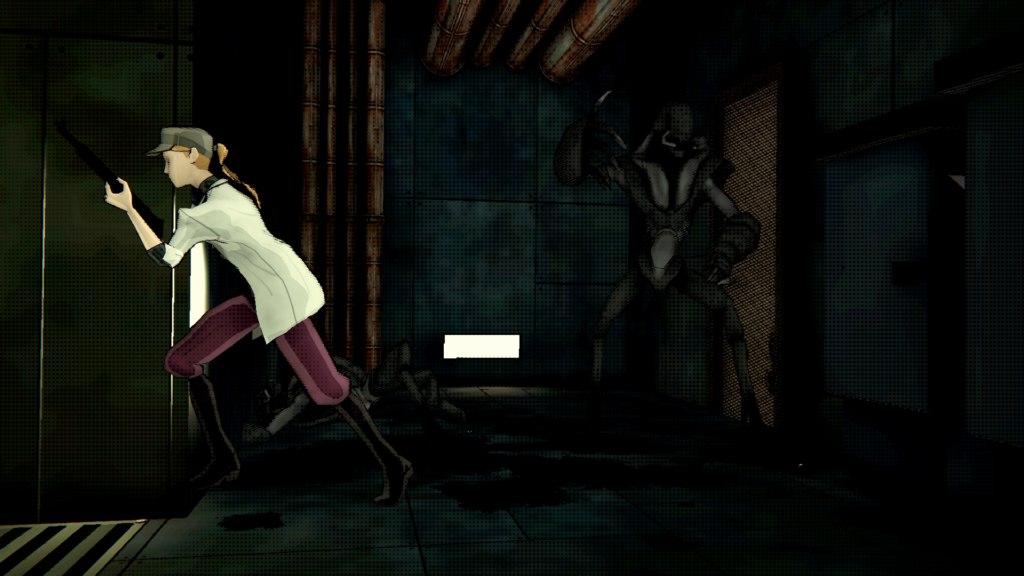

Old-school survival horror meets a secret research facility where getting an enemy on the ground doesn’t necessarily mean it’s staying there.
QUICK SNAPSHOT
Developer: Underwater Castle Inc.
Genre: Survival Horror / Horror Search Action
Platform: Windows, macOS, Linux
Demo Length: Around 30 minutes
Demo Available: Yes, Free on Steam
Full Release: Coming Soon
KEY TAKEAWAYS
- Fixed cameras and tank controls give LITMUSTEST a classic survival horror feel.
- Inventory management, item combinations and puzzles reward actually paying attention to your surroundings.
- Combat gets more tactical once you learn enemies aren’t necessarily dead just because they hit the floor.
- The demo reveals just enough about Obyekt Grovnyca to make me want to know what happened there.
FIRST IMPRESSIONS
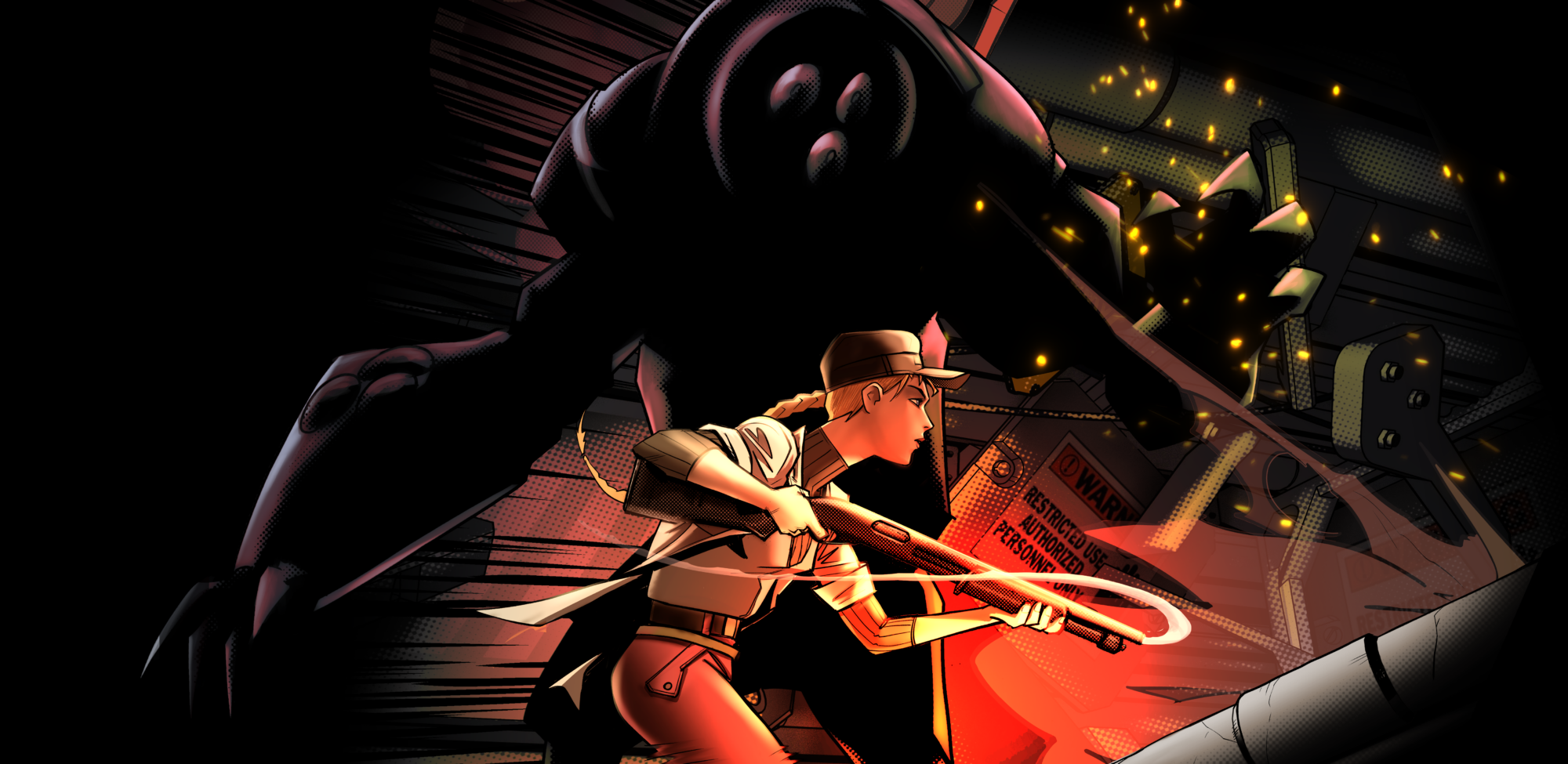
LITMUSTEST wastes little time getting Nova Conti into trouble.
Nova is working at Obyekt Grovnyca, a secret research facility, when she receives an emergency call that abruptly cuts out. With security silent and the facility locked down, what starts as an investigation quickly turns into finding a way out.
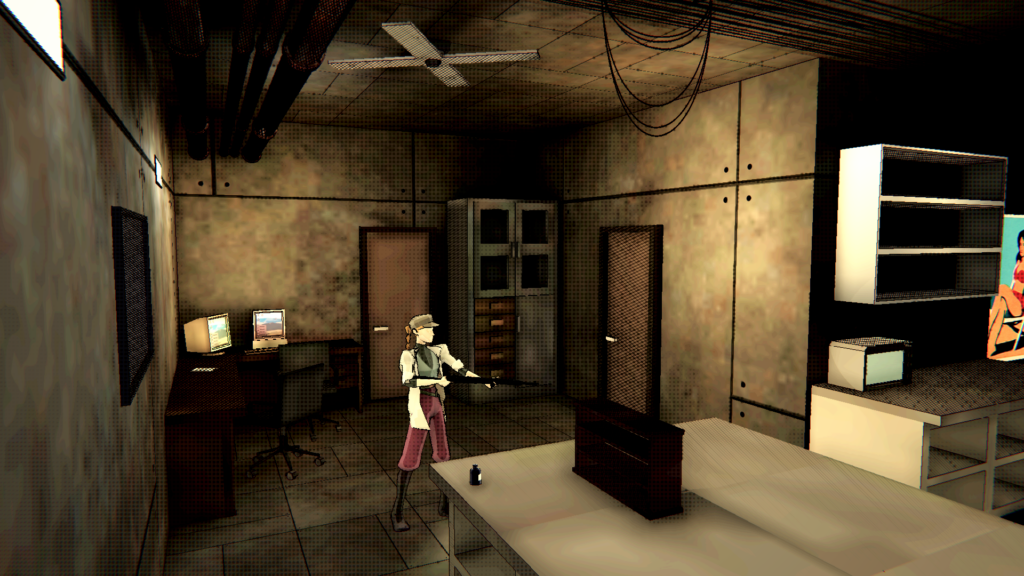
My first spot was the Bullpen, which I was already in, essentially a rest area that gives you some breathing room to learn the basics. The tank controls took me a little time to get used to, but an in-game manual doubles as a tutorial, so adjusting didn’t take long.
I also found a coffee pod used at the coffee machine to manually save. Thankfully, LITMUSTEST also has autosaves occasionally, so coffee isn’t the only thing standing between you and lost progress.
THE GAMEPLAY LOOP
Exploration quickly becomes the core of the demo.
Nova needs four manager key cards to escape, which sent me through chemistry, materials and medical labs, dorms, a kitchen and the connecting areas between them.
Along the way, I picked up documents, ammunition, healing items and materials that could be combined. Gunpowder can be processed into ammo, while different oils can be mixed to improve their healing effects.
The puzzles also fit naturally into the facility.
My favorite involved the chemical N-91. Documents reveal some workplace tension between researchers Dudarev and Penkov, with Penkov dismissively referring to N-91 as “industrial glue” while resenting the attention it received over his own G-7 compound.
Unfortunately for Nova, Dudarev’s key card has been sealed away using G-7.
That meant synthesizing N-91 myself through several chemical reactions before heating the final compound. I barely took chemistry in school and tool physics instead, so this was a fun crash course. Plus, it’s a puzzle, but it’s also telling you something about the people who worked here.
THE ATMOSPHERE
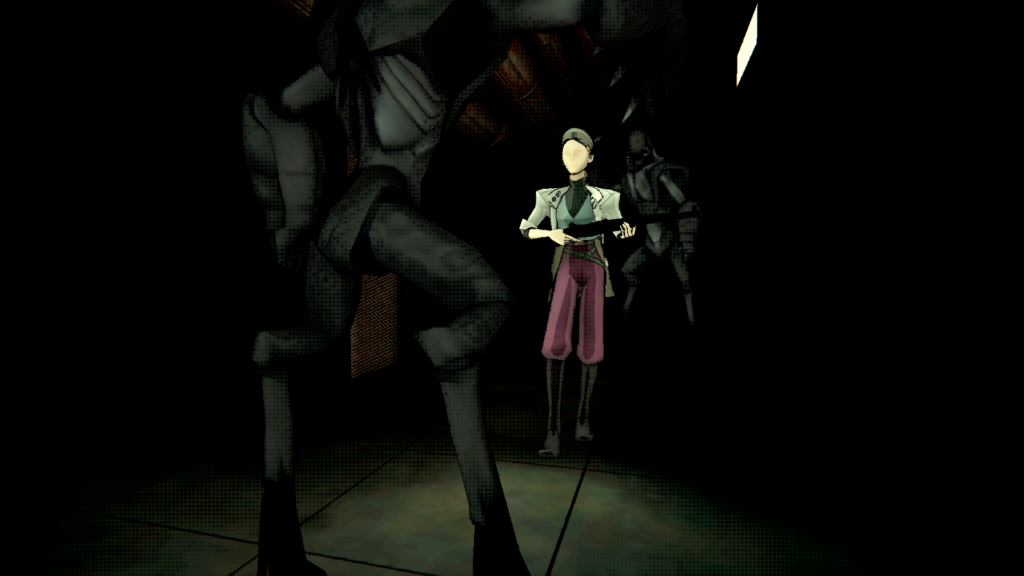
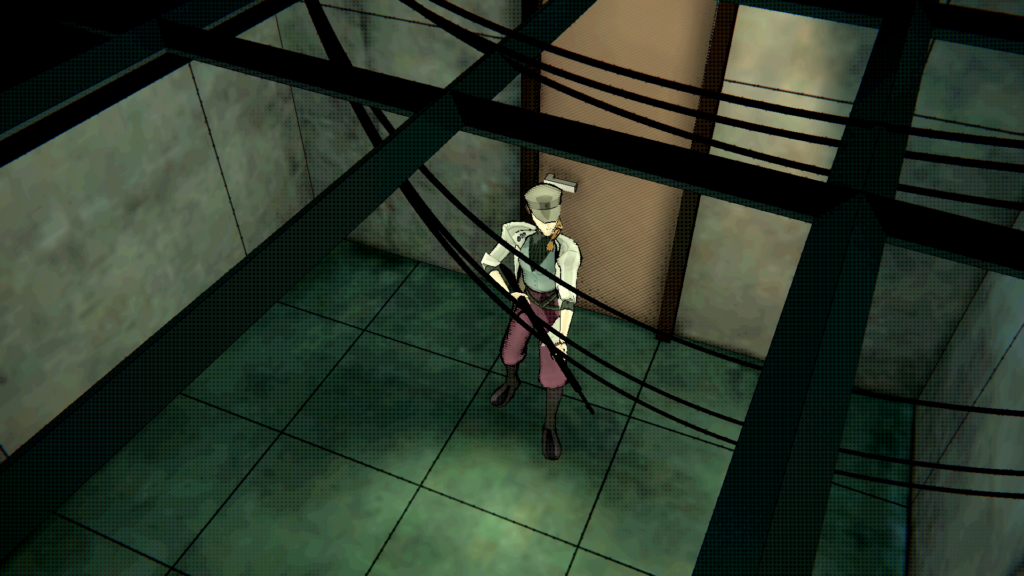
Underwater Castle leans hard into late ’90s survival horror with fixed camera angles, dark corridors and rooms where you don’t always know what’s waiting beyond the frame.
The cel-shaded, comicbook visual style keeps LITMUSTEST from looking like it’s simply trying to recreate an old PlayStation game.
Small environmental details also add context. Finding Nova’s dorm and having her recognize where she slept made the facility feel like her workplace and not just another spooky building I was wandering through.
SOUND DESIGN
Sound becomes especially useful around the fixed cameras.
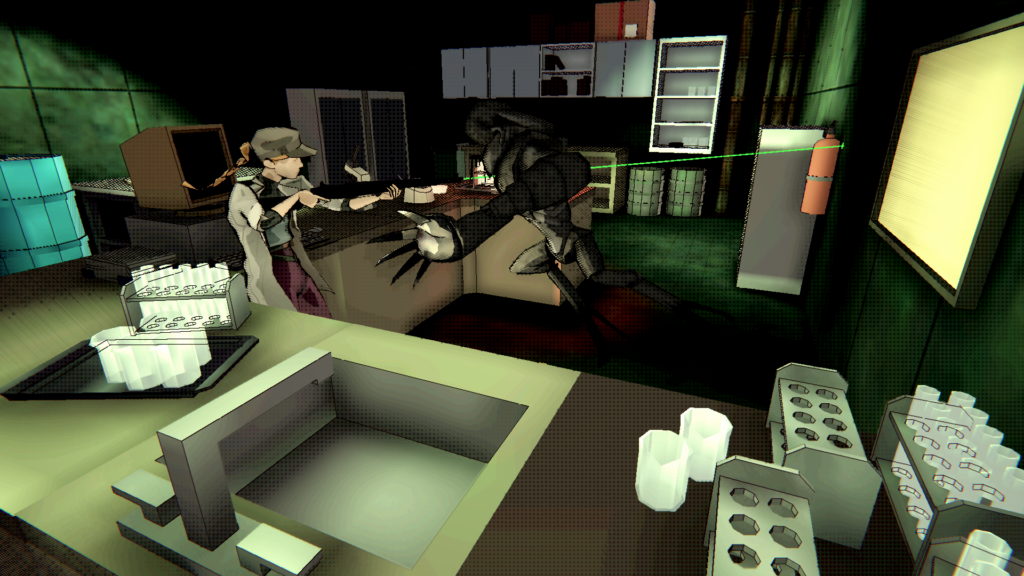
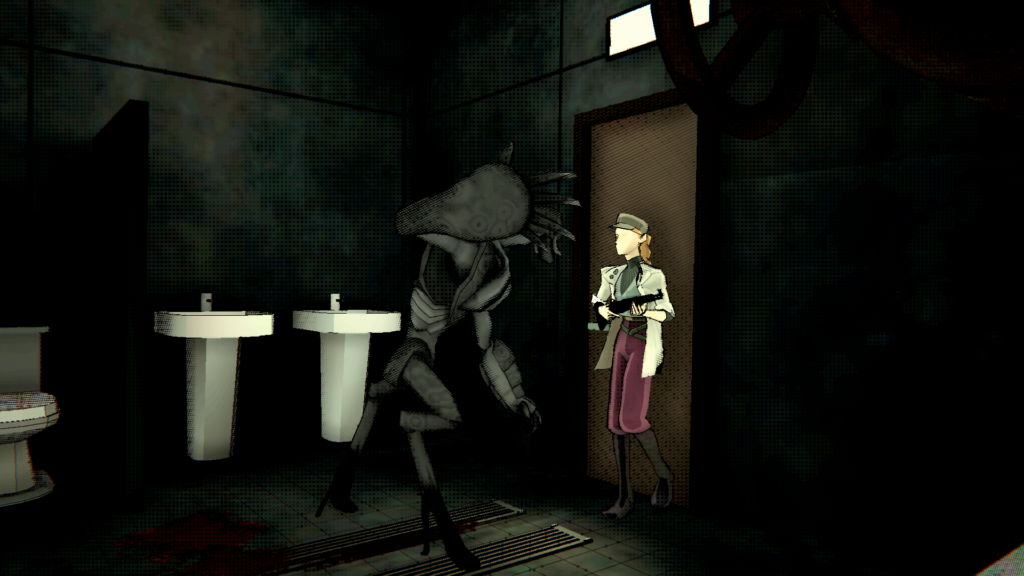
There were moments where I could hear an enemy somewhere nearby without actually seeing it. Rather than waiting for it to wander onto the screen, I could raise my weapon and aim around the unseen space.
When my controller started rumbling, I knew I’d locked onto something off-screen.
It’s a small feature, but I really liked it. The fixed perspective still limits what I can see without leaving me completely helpless. I could use sound, aiming and controller feedback to prepare an attack before an enemy entered view.
WHEN IT CLICKS
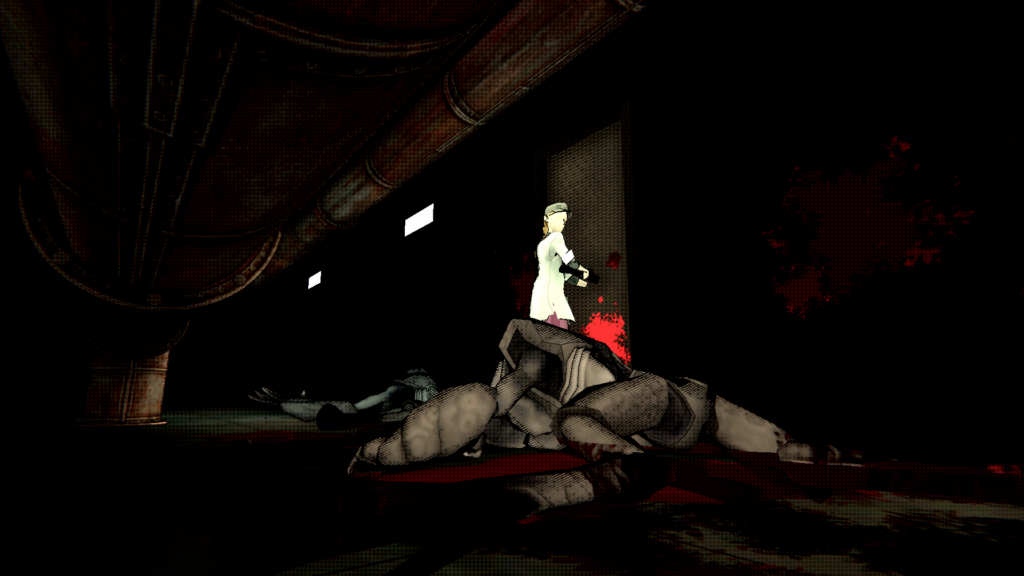
Combat clicked once I realized knocking something down wasn’t the same as killing it.
Enemies can get back up, so being able to aim high and low matters. I could put additional rounds into something on the floor rather than blindly assuming the fight was over.
There are also faster, more aggressive enemies, which forced me to adjust when keeping my distance wasn’t enough.
I died once during the demo, mostly while getting used to the controls and dealing with multiple enemies. After that, combat felt much more manageable.
There are even hidden gold medallions you can shoot, giving me another reason to pay attention while exploring.
WHAT DIDN’T WORK
The tank controls will probably be the biggest adjustment for some players who aren’t familiar with older survival horror games.
They initially made movement and combat feel awkward for me at first, especially when more than one enemy was involved. The tutorial manual helped, though, and I adapted quickly to where the tank controls were not an issue.
DEMO VERDICT
LITMUSTEST left me with more questions than answers, and I mean that positively.
I know Nova needs to escape. I know something has gone very wrong inside Obyekt Grovnyca. I also learned enough about its researchers and experiments to start wondering whether any of their work connects to the creatures roaming its halls.
But I still don’t really know what’s happening.
That’s exactly why the demo worked for me.
LITMUSTEST combines familiar survival horror mechanics with some smart touches of its own, particularly how its puzzles feed into the facility’s history and how aiming and controller feedback work around the fixed cameras.
For players who miss inventory management, fixed perspectives, environmental puzzles and monsters that really should learn to stay down, LITMUSTEST is one to keep an eye on.
WATCH THE FULL PLAYTHROUGH
Curious about what happened at the Obyekt Grovnyca secret research facility, then play or Wishlist LITMUSTEST here.
If you want a demo with a multitasking challenge, check out Night Portable, or take a look at Shroud of Gloom for a point and click venture.
Remember, follow Gravenox Horror Gaming, and trust me to explore horror so you don’t have to.

Nero is a writer and lore researcher known for reviewing games on Steam. With years of experience playing horror games, uncovering hidden narrative patterns across indie and AAA titles, and publishing museum catalogs on ancient objects, he blends commentary with psychological horror theory. When he’s not unraveling storylines, he’s enjoying rock music, drawing, working in analytics or obviously playing video games. Check out his latest post to explore the furtive patterns hidden in game lore.