
Aetherial turns a simple missing-person search into nature horror built around unreliable perception, disappearing landmarks, and the uncomfortable realization that the forest may already know who you are.
QUICK SNAPSHOT
Developer: Warm Milk Games
Genre: Psychological horror indie / Exploration / Mystery game
Platform: PC
Price: $1.99 at the time of writing
Playtime: Short-form horror experience
Worth Playing?: Yes, especially if you like slow burn nature horror that lets you piece together what is happening instead of immediately explaining it.
KEY TAKEAWAYS
- The forest becomes more threatening as daylight fades and navigation breaks down.
- Filming supernatural anomalies slowly reveals objects connected to the missing hiker.
- The first person perspective makes getting lost feel personal instead of abstract.
- The mystery becomes more interesting once the objects start resembling your own belongings.
- Navigation works as horror until complete disorientation starts turning tension into frustration.
FIRST IMPRESSIONS
Going into Aetherial, I thought I knew what I was getting with a missing hiker, objects scattered around a forest, and something supernatural hiding between the trees.
From that, I presumed just find the objects before something finds me. I’ve played this kind of game before.
Then I found a streetlight. Just standing there along a forest path.
I raised my camera and filmed it because a working streetlight sitting in the middle of nowhere probably deserves some attention. When I walked past it, the light suddenly went out.
I turned around, and the streetlight was gone. Lying there in its place was a flashlight.
That was the moment Aetherial caught my interest. My mind was wondering if the streetlight was ever actually there?
So the game went from another first person collect-things-in-the-woods horror game to something in the forest showing me one thing while hiding something else underneath.
THE GAMEPLAY LOOP
The basic loop is simple:
Follow the path, Detour into the forest, Film anomalies, Investigate what remains, and Keep moving before dark
At first, exploring away from the path feels optional until curiosity starts doing most of the work.
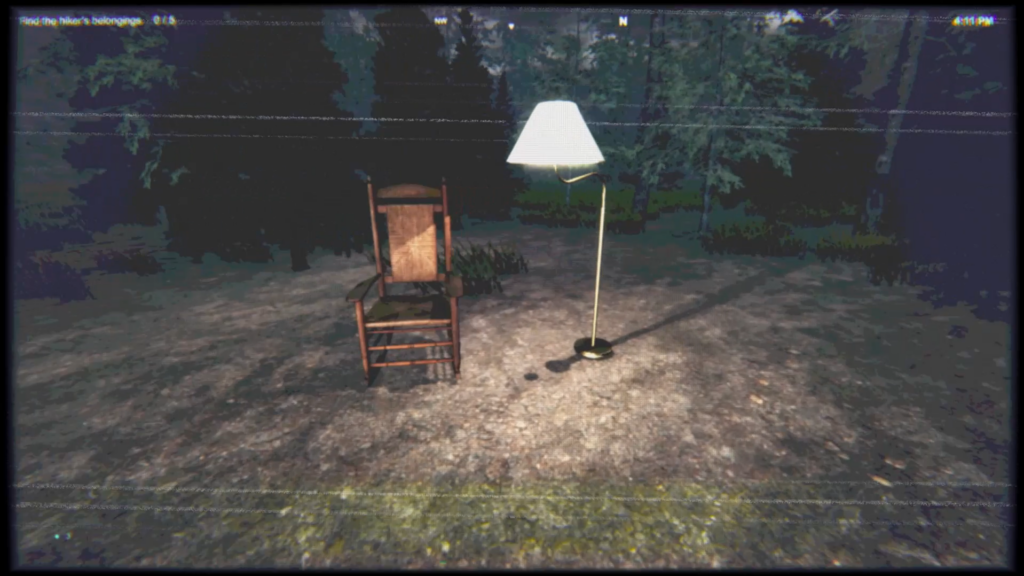
I found a rocking chair and lamp sitting in a small clearing. After filming and approaching them, they vanished and a tent appeared.
My character noticed something strange. The zipper looked exactly like the zipper on his own tent, which was interesting.
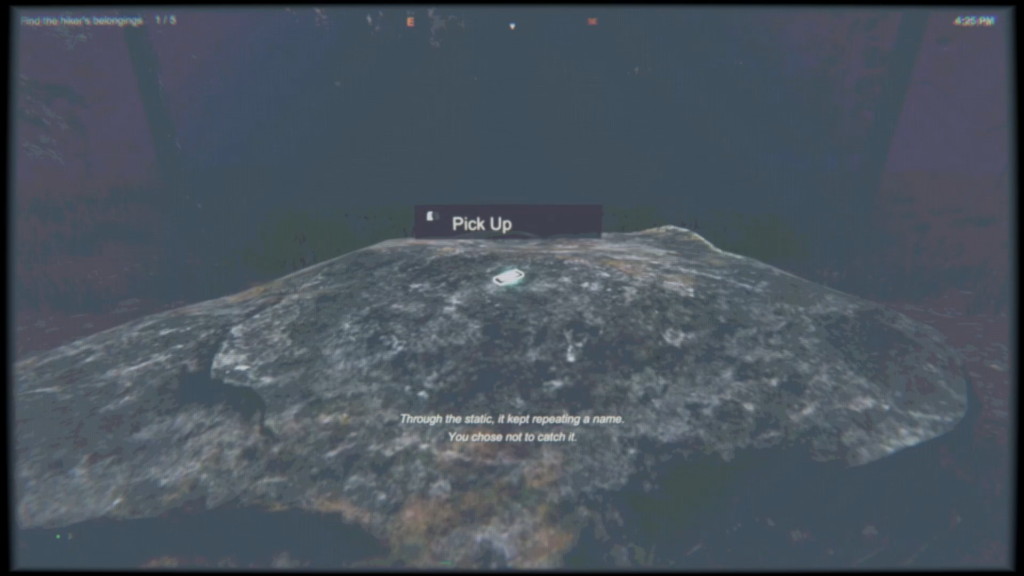
Later, I wandered into a grassy area and found a radio sitting on a large embedded rock, playing “St. James Infirmary.”
After investigating it, the scene changed again. A phone appeared, but its screen was cracked.
My character mentioned that his phone was cracked in the same way. Now we had a pattern. The anomalies were becoming increasingly personal.
This was feeling more like a mystery game built around recognition.
I began asking why everything you find feels familiar.
THE ATMOSPHERE
The nature horror works best here.
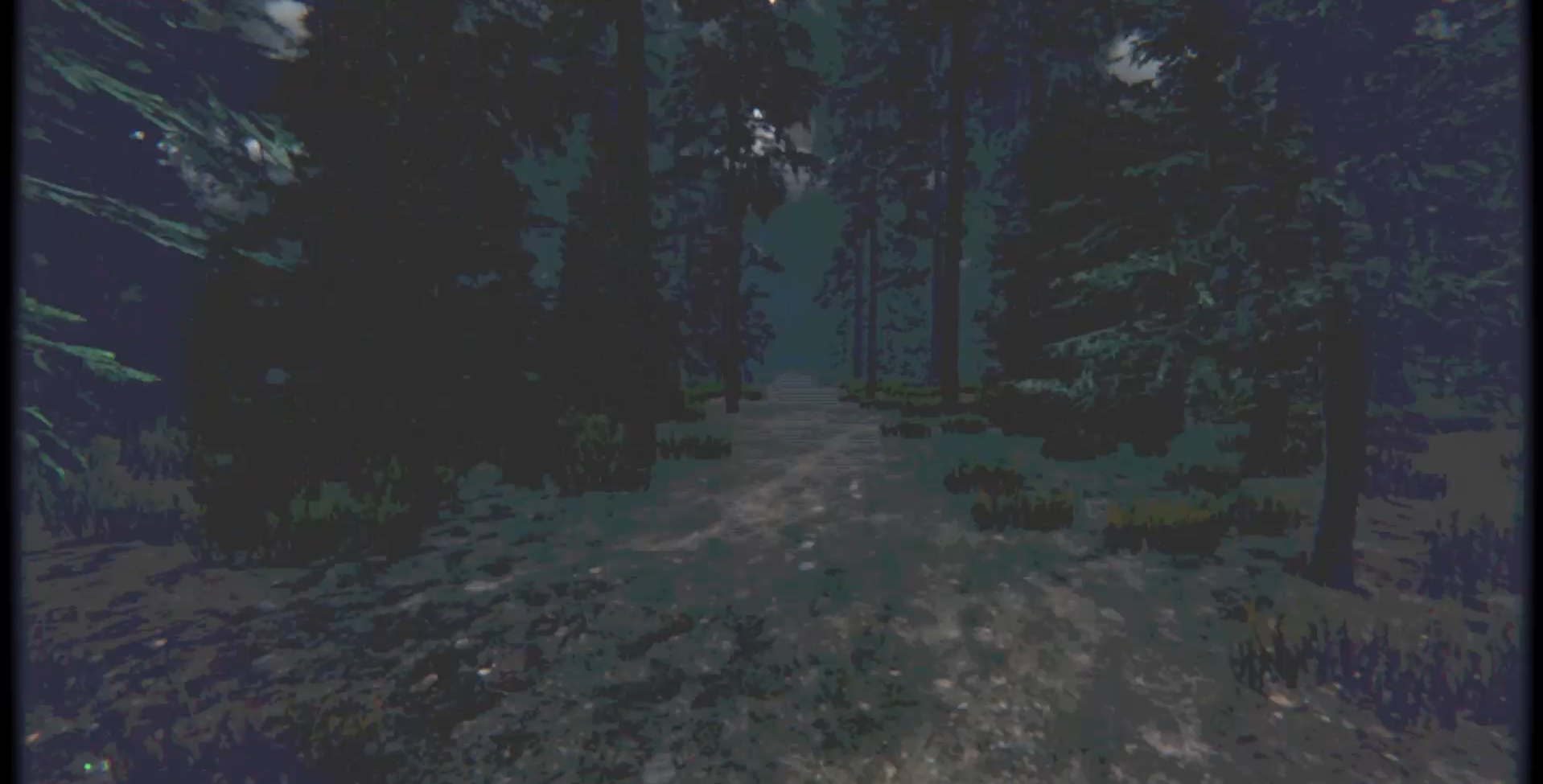
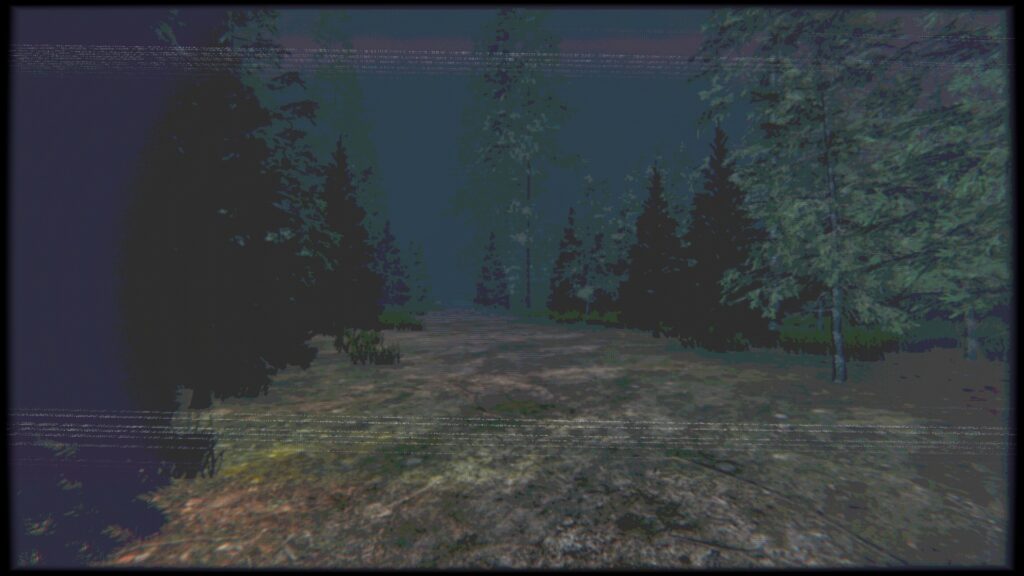
Stay on the main path and the forest feels relatively understandable. Step away from it and things start slipping.
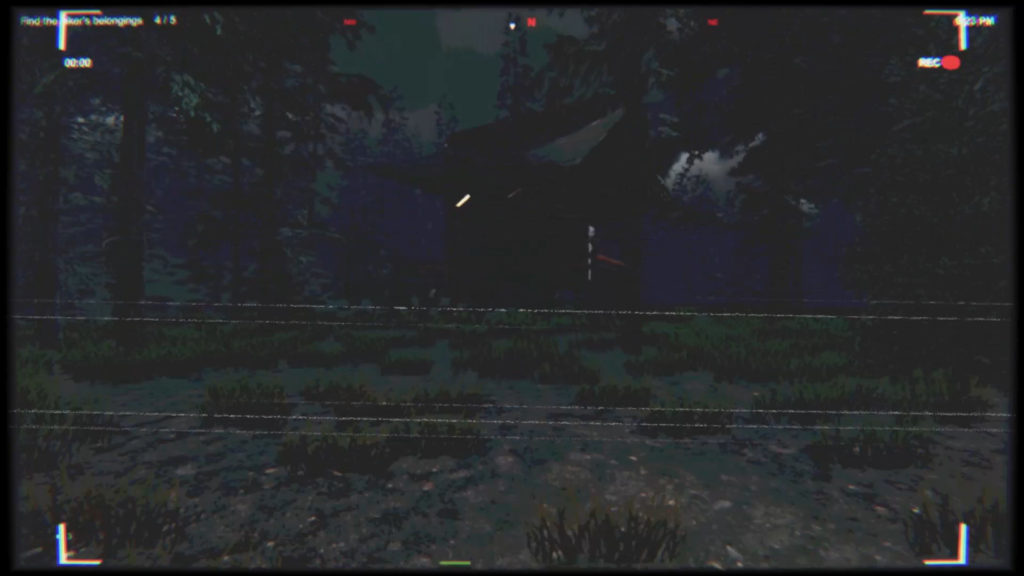
Off the path, your vision distorts and fog makes navigation harder. Trees start looking identical. Getting back to the path suddenly isn’t as simple as turning around.
During my first run, night eventually fell, and I spent around ten minutes completely lost before restarting.
Normally, getting lost that badly in a game risks becoming frustrating rather than scary.
Here, it mostly fits. Aetherial treats the environment itself as the threat, as the forest just needs to stop making sense.
Your compass works while daylight remains. Then the sun starts disappearing and your certainty goes with it.
That is a strong approach to nature horror because the environment is actively dismantling your ability to understand where you are.
SOUND DESIGN
The forest sound starts making you suspicious. As darkness approached, I heard wolf howls.
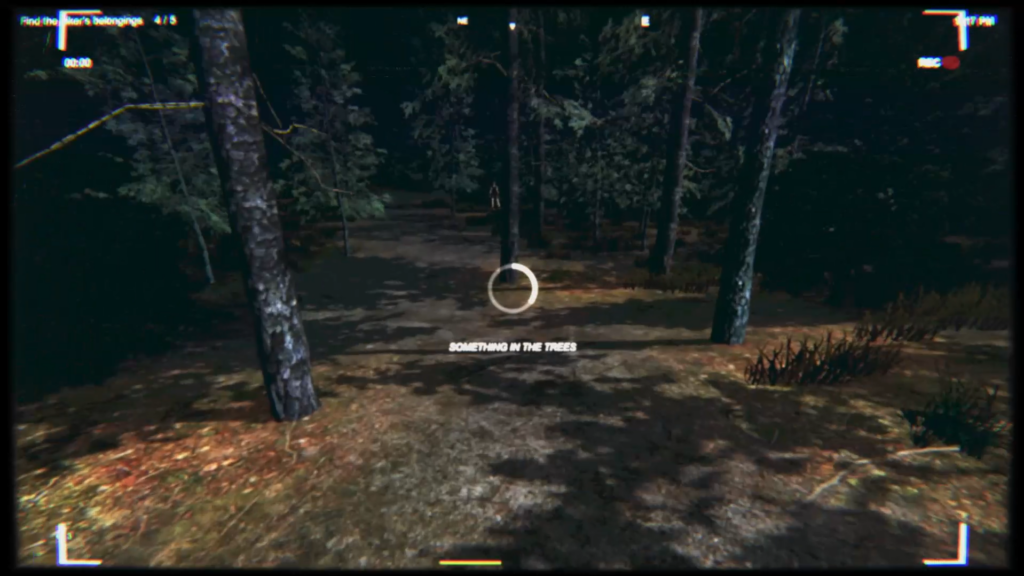
Later, breathing directly came into my ear. I also occasionally caught something moving among the trees – or rather my camera did.
The camera becomes one of the more interesting parts of the game because it raises another question, “is it revealing things the protagonist cannot properly perceive?”
As I became less certain, I started checking things that normally wouldn’t deserve a second glance.
WHEN IT CLICKS
The best moment in Aetherial is when the objects start connecting like the flashlight, tent, and cracked phone.
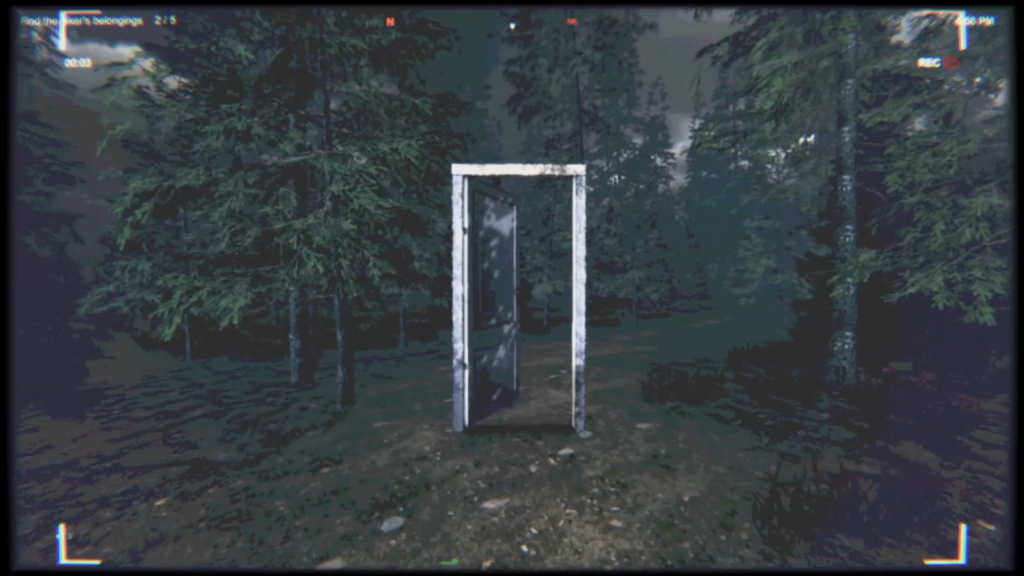
Then I encountered a door standing impossibly along the forest path while someone knocked aggressively.
When I approached, a woman suddenly appeared, and my vision washed white.
Once my sight cleared, both she and the door were gone.
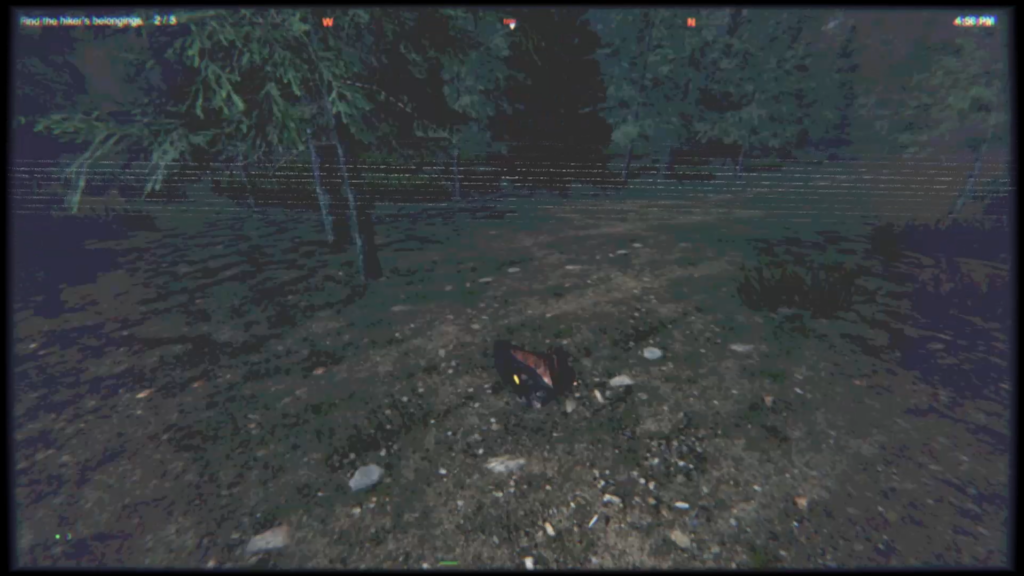
All that was left was a hiking boot. My character examined it and mentioned it looked like his.
At that point, Aetherial had basically been waving the answer in my face. I just didn’t know the question yet.
Here the psychological horror indie side of the game becomes much stronger.
The fear is that your own character keeps recognizing pieces of himself without understanding what those pieces mean.
WHERE IT BREAKS
The forest can become genuinely confusing.
There is a difference between intentional disorientation and wandering around long enough that the tension starts evaporating.
My first nighttime run crossed that line. Once I was completely lost, I eventually stopped worrying about what might be in the forest.
I just wanted to find the path again.
That is the risk behind one of Aetherial’s strongest mechanics.
The failing compass creates some tension while you still believe you can recover. With the horror relying on isolation and intentional disorientation, and less reliant on scary, it risks this tension becoming frustration.
The short runtime helps, though. Restarting didn’t feel like losing hours of progress.
THE ENDING (NO SPOILERS)
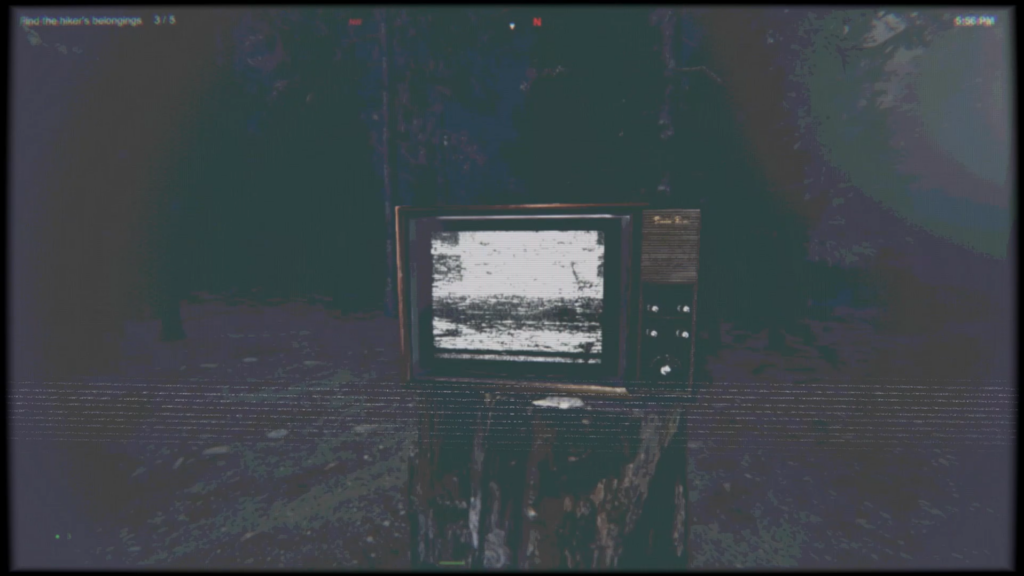
Eventually, I followed an icon on my compass and found another television. This one played a news report about the missing hiker.
Volunteers had been searching for three days. Authorities had discovered evidence that the hiker had been in the forest.
But they hadn’t found a body. Then the missing person image appeared.
It was my Steam profile image.
Oh.
Suddenly, every strange observation made sense, and Aetherial had been telling me that almost the entire time.
That reveal turns the game from a straightforward missing person search into a much more interesting mystery game.
FINAL THOUGHTS
Aetherial works because its twist isn’t hidden behind a giant exposition dump.
You keep finding pieces of yourself while believing you’re looking for someone else.
That makes the anomalies more interesting in hindsight.
Each impossible scene seems to obscure something real underneath it, turning the camera into more than a gimmick.
The navigation can become frustrating once darkness completely removes your bearings, but when Aetherial keeps you balanced between curiosity and uncertainty, the nature horror works.
WATCH THE FULL PLAYTHROUGH
If you want a short psychological horror indie with a first person perspective, supernatural anomalies, and a missing person mystery, Aetherial is worth checking out.
There’s also They Not Fae! and AFAR if you want more found footage or camera themed horror.
If you’re into indie horror breakdowns like this, follow Gravenox Horror Gaming, and trust me to explore horror so you don’t have to.

Nero is a writer and lore researcher known for reviewing games on Steam. With years of experience playing horror games, uncovering hidden narrative patterns across indie and AAA titles, and publishing museum catalogs on ancient objects, he blends commentary with psychological horror theory. When he’s not unraveling storylines, he’s enjoying rock music, drawing, working in analytics or obviously playing video games. Check out his latest post to explore the furtive patterns hidden in game lore.